RWA is shifting from asset tokenization to building a 24/7 continuous macro market, and its far‑reaching impact is underestimated.
Most people are still reading RWAs through the wrong lens.
✧ The easy take is that this cycle is about tokenizing Treasuries.
✧ But Treasuries were only the entry point.
They gave institutions a familiar entry point while moving capital onto better rails.
Let's go deeper 👇
◢ The bigger shift
RWAs are not just about wrapping old assets and calling them onchain.
They are about what happens when global market exposure starts moving through infrastructure that never closes.
That first phase worked because Treasuries gave institutions a clean starting point: familiar yield, familiar risk, and better rails.
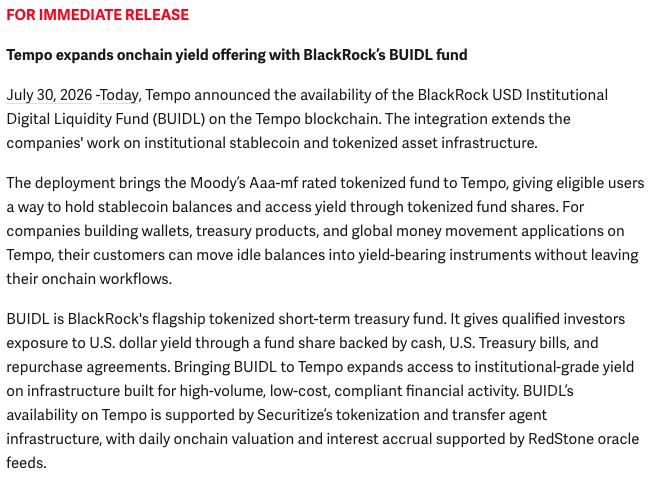
@BlackRock’s BUIDL helped normalize tokenized Treasuries, and RWAs became one of the few crypto narratives institutions could take seriously without changing their behavior overnight.
By early 2026, tokenized RWAs are estimated around $30B to $37B.
Treasury linked products still represent roughly $8B to $10B+ of that market.
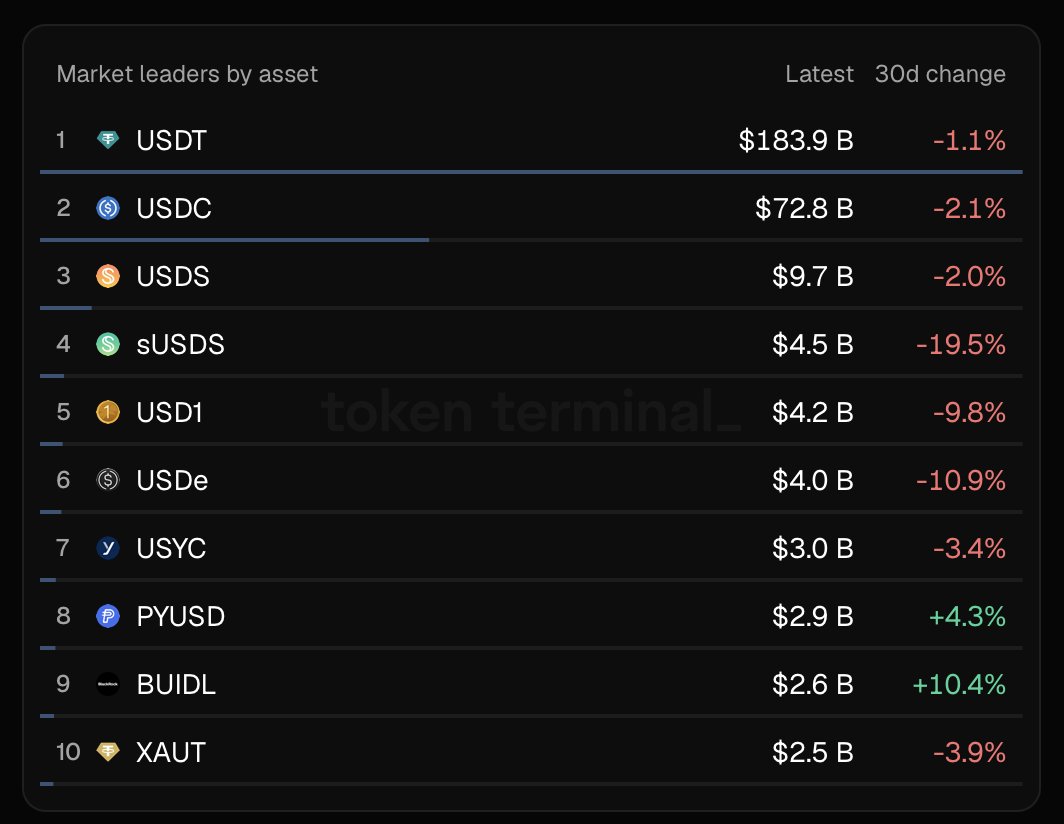
BUIDL alone accounts for around $1.5B to $2B.
But that was the legitimacy phase.
The next phase is about flows.
◢ The shift
RWAs started with capital looking for yield.
Now they are moving toward behavior looking for continuous markets.
That distinction matters more than the assets themselves.
→ A tokenized Treasury is mostly a familiar product with better rails.
➮ A tokenized commodity, FX exposure, or macro risk instrument changes how people hedge, position, and react to global events.
This is where the RWA narrative becomes much bigger than tokenization.
◢ What changed
Commodities are the first visible expression of this shift.
Tokenized commodities are still early, roughly $6B to $8B, and gold dominates the category through PAXG and XAUT.
Silver, oil, and other exposures remain fragmented, but the direction is becoming clearer.
These products are not being used only as “crypto assets.”
They are being used as tools for:
● inflation hedging
● geopolitical positioning
● currency debasement protection
● cross market risk exposure without settlement friction
That is closer to macro positioning than onchain yield farming.
◢ The real signal
The important part is not that commodities can be tokenized.
The important part is that they can trade continuously.
Traditional markets still depend on sessions, windows, cycles, and weekend gaps.
Crypto infrastructure does not have that constraint.
So liquidity does not always wait for the next market open.
It reroutes.
That rerouting effect is the real signal.
When FX, commodities, and risk assets can be expressed on infrastructure that runs 24/7, the boundary between market hours and global time starts breaking down.
◢ The stack forming
The early version of this parallel market structure is already visible.
➜ PAXG / XAUT = onchain commodity exposure
➜ USDT / USDC = settlement layer for global liquidity
➜ @Uniswap = spot coordination layer
➜ @synthetix = synthetic risk expression
➜ @HyperliquidX = continuous derivatives layer
➜ @arbitrum +
= execution environments for scale
Individually, these are separate tools.
Together, they start to look like a parallel macro stack where price discovery is no longer tied to opening bells, closing sessions, or weekend gaps.
◢ Why it matters
Once markets become continuous, behavior changes before structure does.
→ more onchain exposure
→ more continuous liquidity
→ tighter pricing
→ more participants
→ deeper settlement demand
→ more capital migration onchain
This is the feedback loop the market is still underestimating.
RWAs are not just digitizing assets.
They are pulling pieces of global market behavior into systems that are faster, always open, and less dependent on legacy trading hours.
That does not mean crypto replaces TradFi overnight.
It means market hours slowly become a legacy constraint.
◢ Final note
RWAs started as a bond story because Treasuries were the easiest asset for institutions to understand.
But the bigger story is not bonds.
It is behavior.
The real convergence in 2026 is not simply what gets tokenized next.
It is what happens when macro exposure, settlement, liquidity, and price discovery start moving through markets that never close.
My take:
RWAs are becoming less about tokenization and more about the disappearance of market time.