Rewards
Futures Daily Draw
100% Chance To Win With Daily Trades
Spot Daily Draw
Win 8,888 USDT In Grand Prizes
Mobile Top-Up
Top up mobiles easily, online, secure
Send
Send money globally, fast and secure
BitMart Mall
Live on crypto

thUSD (THUSD)
--
0%
24H
thUSD THUSD Price History USD
Track the price of thUSD for today, 7 days, 30 days and 90 days
Period
Change
Change (%)
Today
--
--
7days
--
--
30days
--
--
90days
$ 0
0.00%
Own THUSD Now
Buy and sell THUSD easily and securely on BitMart.
thUSD Market Information
$ 0.94 24h Range $ 0.99
All time high
$ 0.99
All time low
$ 0.94
24h Change
24h Vol
0
Circulating supply
0.00
THUSD
Market cap
0
Max supply
--
Fully diluted market cap
0
Trade THUSD

thUSD X Insight

Tanaka
FA_Analyst
Influencer
B
 45.6K @Tanaka_L2
 Neutral
Theo project's fifth week of thUSD points is live and can be tracked in the app.

Theo D
128.0K @Theo_Network The fifth week of thUSD points are live in the app.
Track everything you've earned in one place: https://t.co/NdY0yqySJc https://t.co/Lh1nj9CPlm
 84
84
 8
8
 10.1K
10.1K
2026-07-31 15:17
Trend of THUSD after release
Neutral
Theo project's fifth week of thUSD points is live and can be tracked in the app.

Nick Research
Derivatives_Expert
OnChain_Analyst
S
10.2K @Nick_Researcher Bullish
YPO is a key metric for assessing stablecoin yield, $thUSD is worth watching.
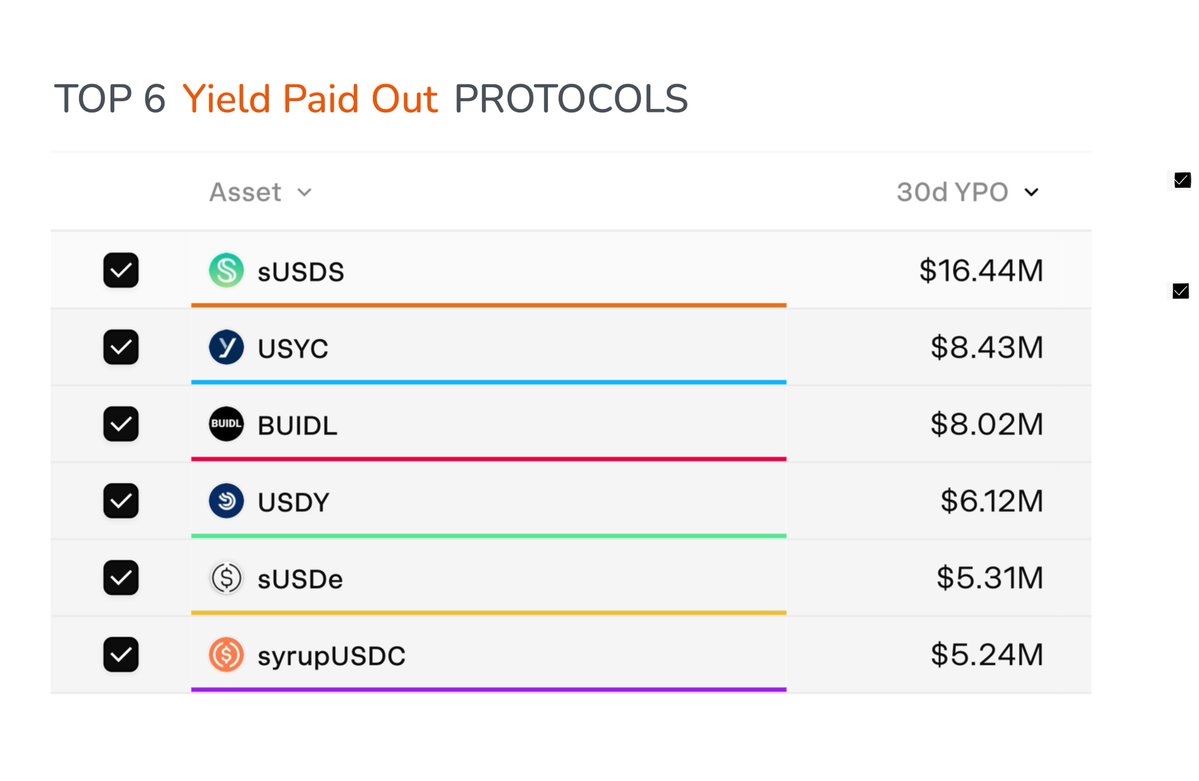
➥ top 6 stablecoin yield assets paid out $44.25M in real yield 30D
fyi, i think YPO is the most important metric to watch
- Yield Paid Out shows what holders actually received over a period
- real yield delivered only
Top 6 YPO in the last 30D:
- @SkyEcosystem | sUSDS: $16.44M
- @circle | USYC: $8.43M
- @BlackRock | BUIDL: $8.02M
- @OndoFinance | USDY: $6.12M
- @ethena | sUSDe: $5.31M
- @maplefinance | syrupUSDC: $5.24M
a protocol can show 15% APY, but if that yield comes from points, future tokens, weak emissions, or manual claims most users never touch, the realized return is much lower
filtered out, then i'm going heavily on @Theo_Network | $thUSD as they're in its early phase with YPO + points
YPO filters that out as it tells me 3 things:
- the yield source is actually producing income
- protocol has enough capital to distribute meaningful yield
- the yield is reaching holders instead of staying theoretical
that is why I like using YPO together with TVL and APY
APY = offered rate
TVL = capital deposited
YPO = yield actually delivered
for me, this is one of the better ways to separate real stablecoin yield products from inflated yield marketing
 98
44
6.2K
98
44
6.2K
2026-07-10 05:17
Trend of THUSD after release
Bullish
YPO is a key metric for assessing stablecoin yield, $thUSD is worth watching.

Aidang 🦅
FA_Analyst
DeFi_Expert
B
90.5K @ccy1871 Bullish
Theo project announces thUSD points system goes live in its first week, users can track.
Theo D
128.0K @Theo_Network 1/ The first week of thUSD points are live in the app.
Track everything you've earned in one place: https://t.co/NdY0yqySJc. https://t.co/QwbIPjFN2s
 148
19
12.7K
148
19
12.7K
2026-07-03 11:37
Trend of THUSD after release
Bullish
Theo project announces thUSD points system goes live in its first week, users can track.
About thUSD
thUSD (THUSD) is a cryptocurrency launched in 2025and operates on the Ethereum platform. thUSD has a current supply of 582,210 with 0 in circulation. The last known price of thUSD is 0.99661467 USD and is up 0.00 over the last 24 hours. More information can be found at https://tharwa.finance/.
Read More