Купить криптовалюту
карта
P2P Трейдинг
Купить USDT через маркетплейс
Кредитная/дебетовая карта
Покупайте криптовалюту с помощью карт Visa или Mastercard
Оплата третьей стороной
Buy Crypto via MoonPay, Simplex and More
Карта BitMart
Расширение ваших криптовозможностей
Предоплаченная криптовалютная карта
Мгновенно получите карту Mastercard, доступную для использования
USDⓈ-M
Использовать USDⓈ в качестве обеспечения
COIN-M
Использовать монету в качестве обеспечения
TradFi
Единый центр торговли металлами, акциями и иностранной валютой
Демо-торговля
Узнайте, как торговать с нулевым риском
Фьючерсная торговля
Универсальная платформа для фьючерсной торговли
Futures King
478,000 USDT Prize Pool
Grow
Обзор программы Earn
Без труда зарабатывайте на незадействованных активах
Сбережения
Зарабатывайте проценты на холдинге
Стейкинг
Простой стейкинг и хорошие вознаграждения
Управление капиталом
Grow Wealth with a Top-Tier Asset Team
RWA
Удерживайте BMRUSD и получайте доход
VIP-эксклюзив
Стабильный заработок для VIP-пользователей
Rewards
Центр вознаграждений
Discover Exclusive Rewards Worth Up to 14,000 USDT
LaunchPrime
Платформа для запуска NFT и токенов
Партнерская программа
Присоединяйтесь к программе, чтобы зарабатывать высокие комиссионные
Powerdrop
Запущено решение для Аирдропов нового поколения!
Центр событий
The One-Stop Hub For All Business Operations
Futures Daily Draw
100% Chance To Win With Daily Trades
Spot Daily Draw
Win 8,888 USDT In Grand Prizes
Участвуйте в стейкинге для голосования
Заработайте эйрдропы, проголосовав
Учреждение
Профессиональные и эксклюзивные сервисы
VIP
Разблокируйте Эксклюзивные Награды
Академия
Быстро изучите трейдинг и блокчейн
BitMart Internship
Start your Crypto Career Here
Bitmart Путешествия
One-Stop Global Travel Services
Mobile Top-Up
Top up mobiles easily, online, secure
Send
Send money globally, fast and secure
BitMart Mall
Live on crypto

Rune (RUNE)
$ 0.73 (RUNE/USD)
-3.90%
24H
Rune Данные о ценах в реальном времени
Today's price of Rune Is $ 0.73 (RUNE/USD). With A Market Cap Of $ 3,508.85 USD. 24-Hour Trading Volume Of $ 0 USD, A 24-Hour Price Change Of -3.90%, And A Circulating Supply Of 4.75K RUNE.
Rune RUNE Price History USD
Track the price of Rune for today, 7 days, 30 days and 90 days
Период
Изменить
Изменение (%)
Сегодня
$ 0.029
-3.90%
7дней
$ 0.099
15.63%
30дней
$ 0.26
57.45%
90дней
$ 0.35
94.74%
Own RUNE Now
Buy and sell RUNE easily and securely on BitMart.
Rune Информация о рынке
$ 0.73 24 часа $ 0.77
Рекордный максимум
$ 632.53
Рекордный минимум
$ 0.28
Изменение за 24 часа
-3.90%
Объем за 24 часа
$ 0
Количество токенов в обороте
4.74K
RUNE
Рыночная капитализация
$ 3,508.85
Максимальное предложение
22.53K
RUNE
Рыночная капитализация при полной эмиссии
$ 16,658.55
Торговать RUNE
Заработать
Даже незадействованная криптовалюта может приносить пассивный доход! Пользуйтесь сбережениями, услугами стейкинга и другими преимуществами.
Rune Инсайт из X

V
TA_Analyst
Trader
A
 4.0K @finsends
 Бычий
Although RUNE has dropped 99% from its ATH, its technical structure is sound; it is recommended to wait for a break above $2.41 and stabilization before considering entry.
V
TA_Analyst
Trader
A
4.0K @finsends $RUNE does not look too bad despite being down almost 99% from it's ATH.
It has a picture perfect impulse during the bull-run of 2021 and a correction that structurally makes sense.
Since it's down so much, there is a high risk that no new highs will be made next run. That's why I personally would play it safe and wait for it to reclaim the 88,7 at $2,41 and stabilize above.
2nd image is what a confirmation could look like. If we see a sharp drop down, the blue box might be used as an entry for a risky long, while waiting for the first bigger impulse to finish is the safer option.
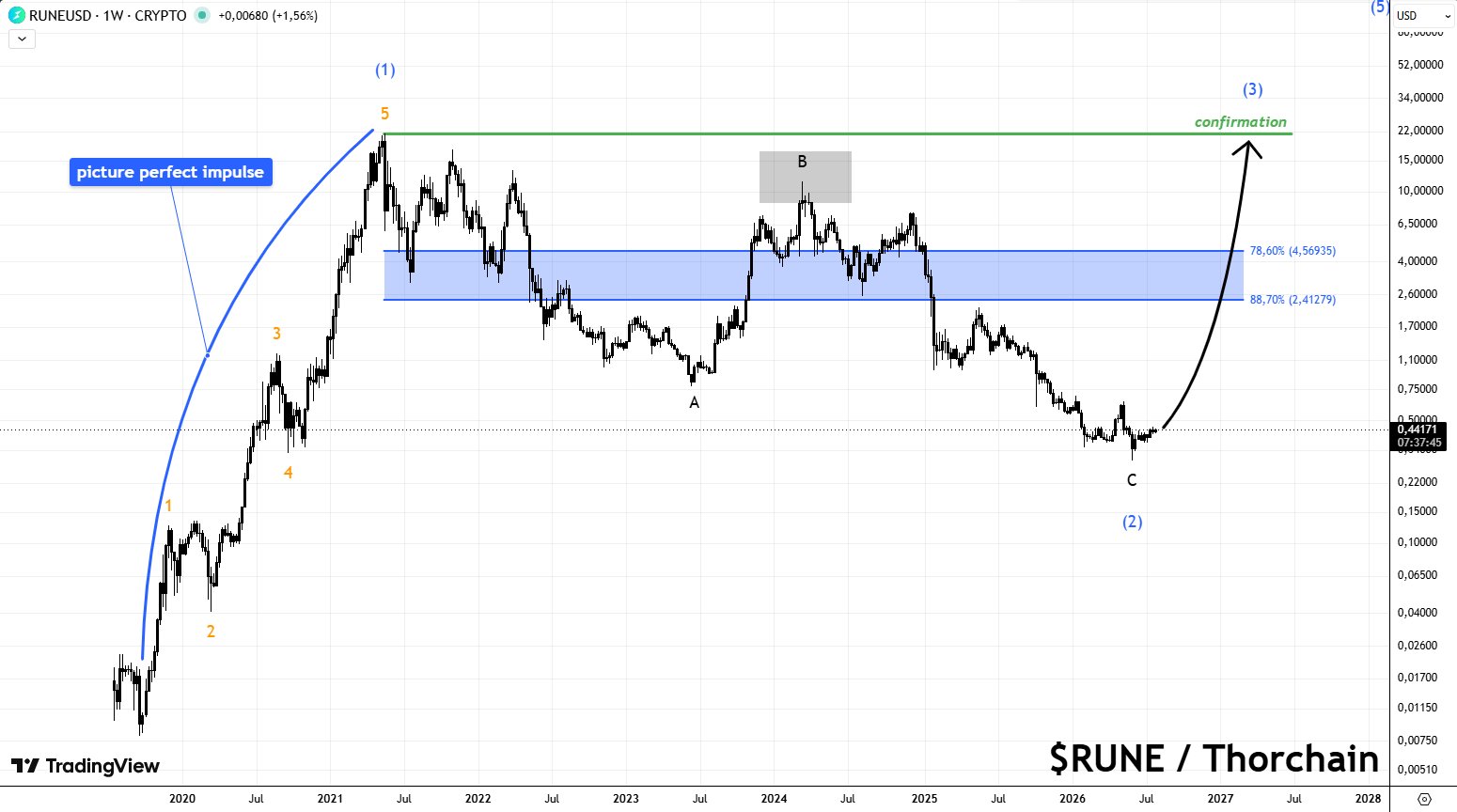
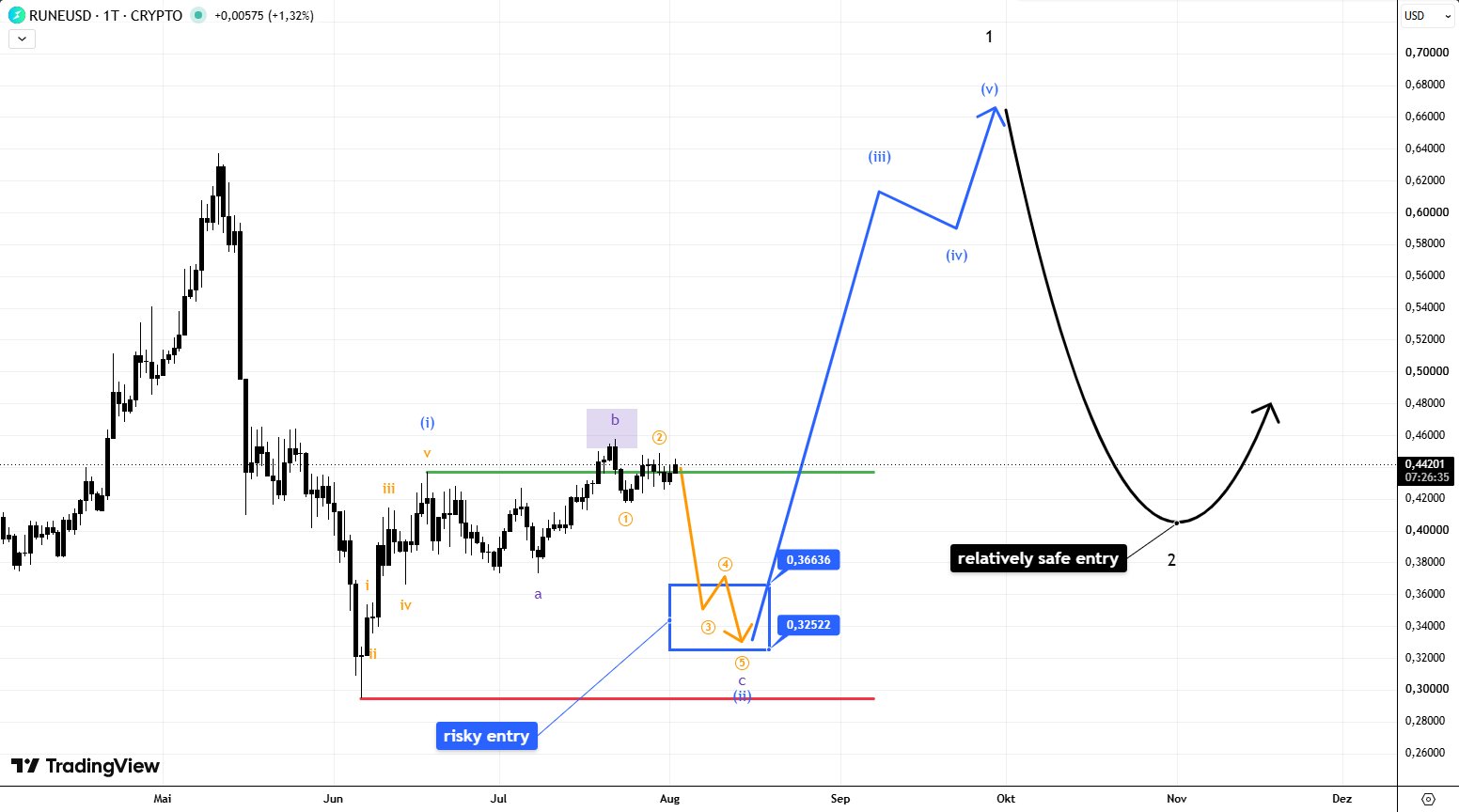
 6
6
 0
0
 288
288
2026-08-02 16:37
Тренд RUNE после выпуска
Бычий
Although RUNE has dropped 99% from its ATH, its technical structure is sound; it is recommended to wait for a break above $2.41 and stabilization before considering entry.

OCT News
Media
Influencer
C
1.9K @news_oct Бычий
THORChain deepens its partnership with Rujira through the ADR-031 proposal, but the community has concerns about RUNE dilution.
THORChain ADR-031 has passed, introducing a new revenue split, a joint POL fund, and deeper integration with Rujira Network.
Read More👇
https://t.co/WpsVo8r8r0 https://t.co/PC1gfEMOUf

OCT News
Media
Influencer
C
1.9K @news_oct Check key reactions on "The Talk"🔽 https://t.co/YWEfPrP88Q
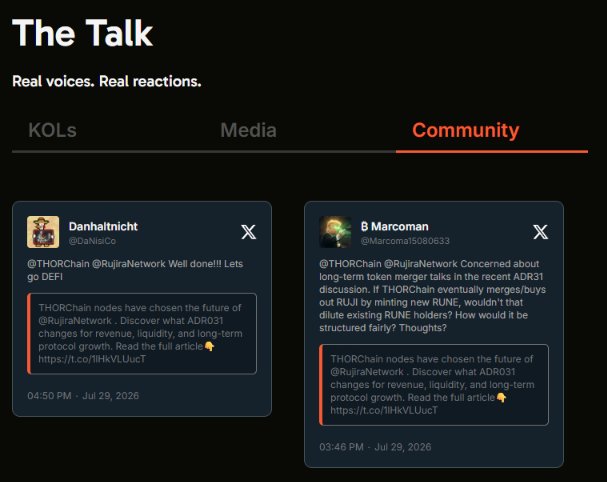 7
1
200
7
1
200
2026-07-29 11:47
Тренд RUNE после выпуска
Бычий
THORChain deepens its partnership with Rujira through the ADR-031 proposal, but the community has concerns about RUNE dilution.

Shelby
TA_Analyst
Trader
B
269.6K @CryptoNewton Чрезвычайно бычий
RUNE shows a long signal, Razor Genesis system confirms a bullish trend, target prices 0.4489 and 0.4623.
$RUNE Long Signal ⚡
The Razor Genesis has confirmed a new LONG setup.
🟢 Grade: A
🎯 Confidence: 87%
📍 Entry: 0.4356
Targets:
• TP1: 0.4489
• TP2: 0.4623
Let's see if the market follows through.
🌐 https://t.co/7WrsPScyOJ https://t.co/mZKw4LT90E
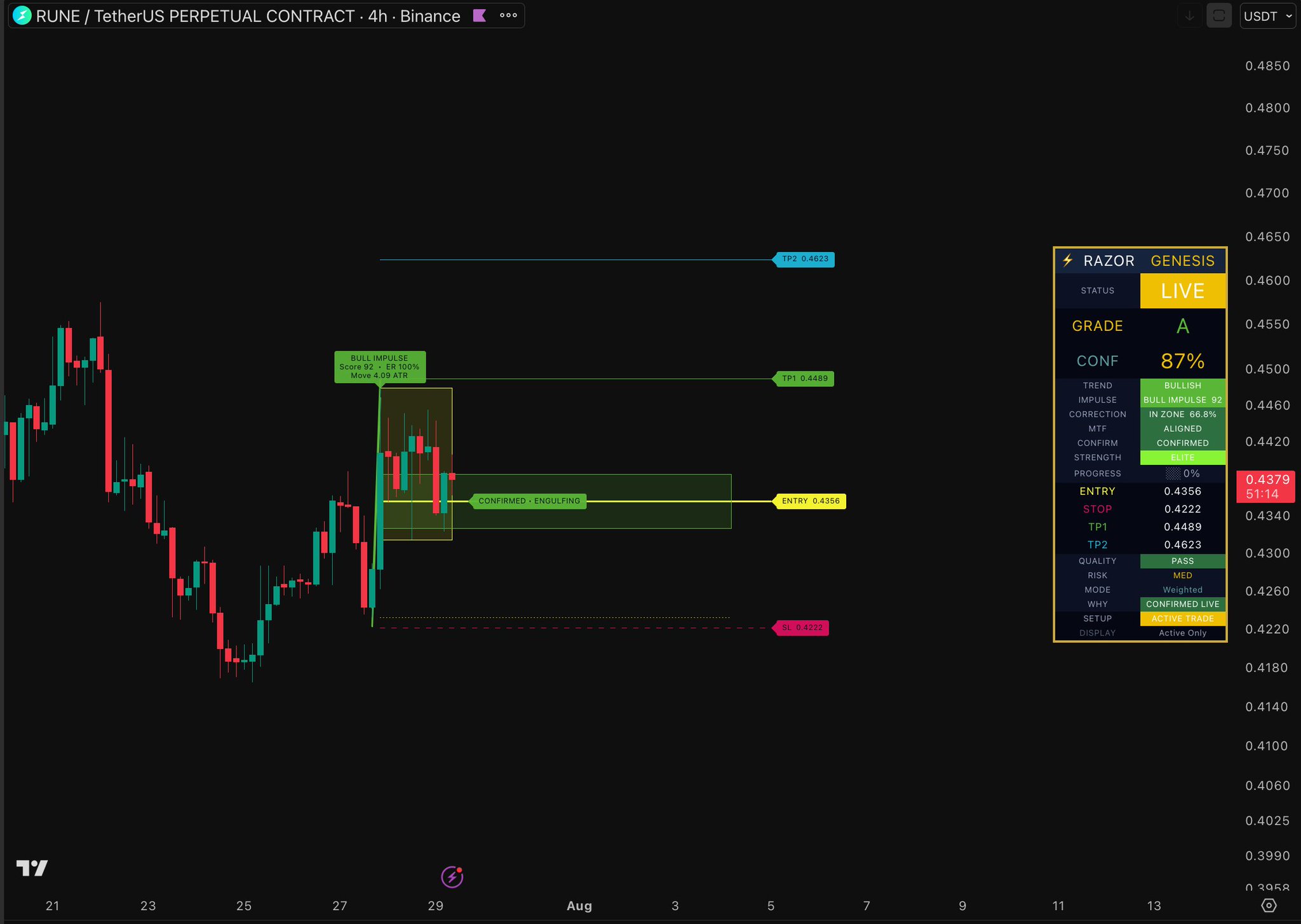 27
8
10.8K
27
8
10.8K
2026-07-29 11:12
Тренд RUNE после выпуска
Чрезвычайно бычий
RUNE shows a long signal, Razor Genesis system confirms a bullish trend, target prices 0.4489 and 0.4623.
Прогнозирование цен
When is a good time to buy RUNE? Should I buy or sell RUNE now?
When deciding whether it’s a good time to buy or sell Rune (RUNE), it’s important to first align with your own trading strategy and risk profile.Long-term investors and short-term traders often interpret market conditions differently, so your decision should reflect your personal approach. According to the latest RUNE 4-hour technical analysis, the current trading signal is Купить. According to the latest RUNE 1-day technical analysis, the current signal is Hold.

Прогноз Beacon
Probabilistic Price Forecast (Next 24 Hours)Отказ от ответственности за прогноз Beacon
The data results displayed on this page are analyzed based on actual trading data (OHLCV) of the selected trading pair along with corresponding technical indicators.
This prediction is an experimental technical product and is provided for reference purposes only. It does not constitute investment advice. Unexpected real-world events may significantly impact market behavior. Traders should make decisions with caution.
This prediction is an experimental technical product and is provided for reference purposes only. It does not constitute investment advice. Unexpected real-world events may significantly impact market behavior. Traders should make decisions with caution.
О нас Rune
Rune (RUNE) is a cryptocurrency launched in 2021and operates on the BNB Smart Chain (BEP20) platform. Rune has a current supply of 4,745.57562148. The last known price of Rune is 0.64977311 USD and is up 2.98 over the last 24 hours. It is currently trading on 30 active market(s) with $0.00 traded over the last 24 hours. More information can be found at https://rune.game.
Читать далее
Официальные ссылки
Chain Explorer