In the last one year, the launch and success of DEX-based tokens like $HYPE, $ASTER and $PUMP has pushed the DEX token market cap past $25B.
But they still trail CEX tokens, which sit above $100B ( $BNB alone holds ~$76B of that).
So how do CEX and DEX tokens actually differ, and why should you care?👇
🔹 THE REAL DIVIDE ISN'T CEX vs DEX
Both sides now run the same core mechanism: take fees, buy the token on the open market, then burn it or lock it. It's crypto's version of a stock buyback.
The proof the label doesn't decide outcomes is in the tokens themselves.
$UNI is a DEX token with first-mover status and a huge user base, but with no active fee-to-token mechanism it has mostly tracked governance cycles, not platform growth.
$OKB is a CEX token that burned ~65M tokens in Aug 2025, capped supply at 21M, and ran +200% in a day.
This is how important tokenomics and designs are.
Three things actually matter when it comes to exchange based tokens:
1. How much real revenue reaches the token
2. Whether you can verify that revenue
3. Whether the mechanism is enforced or can be switched off
1️⃣ VALUE ACCRUAL: WHO ACTUALLY RETURNS REVENUE
On the DEX side, the mechanism is usually coded and public:
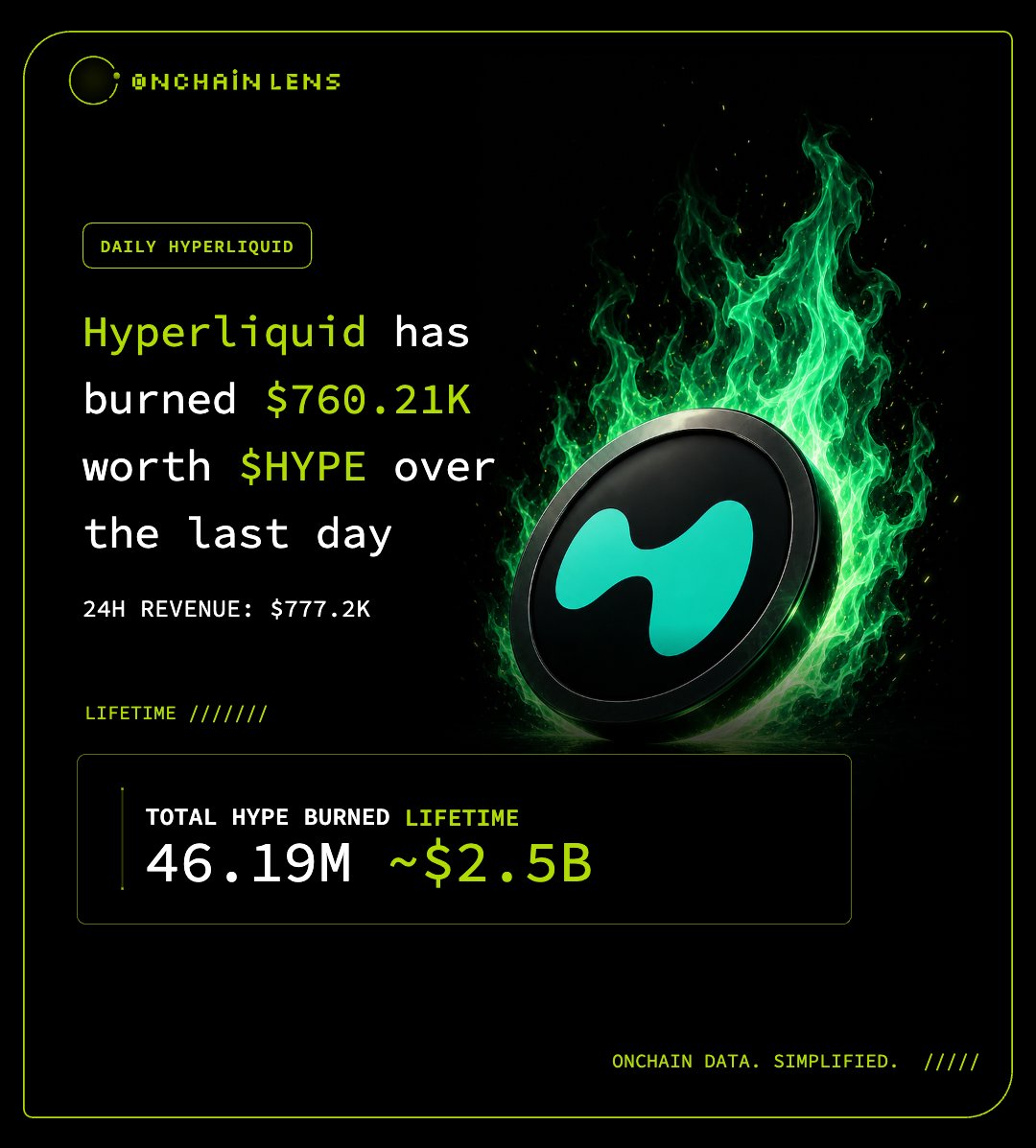
- HYPE routes ~97-99% of protocol fees into continuous, automated buybacks through its Assistance Fund. No team vote to start or stop it. Cumulative buybacks passed $2B in mid-2026.
- ASTER moved to 99% of daily fees into buybacks for stakers, plus matching burns (June 2026), after cutting monthly emissions ~97% in March.
- PUMP directs 50% of net revenue to buyback-and-burn (down from 100% in April 2026).
On the CEX side, it's usually a company decision:
- BNB uses an auto-burn formula tied to price and chain activity, targeting a cut to 100M supply. Its Q1 2026 burn was ~$1.28B.
- $OKB went further: one-time burn, fixed 21M supply, minting disabled. Fixed forever.
- $LEO commits at least 27% of iFinex's monthly gross revenue to hourly buyback-and-burn.
One detail most holders miss: on nearly all of these, you hold no claim on the revenue. A HYPE holder can't redeem against the Assistance Fund. BNB, per Binance's own wording, gives no claim on Binance profits. The value reaches you only through price. That's true on both sides.
2️⃣ REVENUE: CAN YOU VERIFY IT
This is the easiest part to differentiate.
DEX revenue is on-chain. You can pull HYPE's fees on DefiLlama and check them yourself. It runs around $1.3B annualized and has beaten Ethereum and Solana on weekly fees. You can compute a real price-to-fees multiple.
CEX revenue is private. LEO's burn is fully transparent, but iFinex publishes no audited financials, so you're trusting the number feeding the burn. Same for most exchange tokens: you see the burn, not the books.
So the buyback can look identical on both sides while the thing you're actually underwriting, the revenue, is verifiable on one and a trust exercise on the other.
3️⃣ SUPPLY: FIXED vs OVERHANG
OKB (21M, minting disabled) and BNB (heading to 100M) are the tight-supply cases.
The newer DEX tokens carry the opposite problem: dilution ahead. ASTER has only ~34% of its 8B supply circulating, with an FDV near $5B against a ~$1.7B market cap.
PUMP has unlocks worth over $110M landing mid-July.
HYPE has monthly team unlocks too, but its buyback pace has so far outrun them.
The number to watch on any of these isn't the buyback in isolation. It's buyback vs unlocks.
PUMP has bought back over $400M and still trades ~83% below its high, because supply and sentiment outweighed the bid. Buybacks don't guarantee price.
4️⃣ MARKET SURFACE
Both sectors are top-heavy. BNB is ~75% of the CEX token cap. HYPE is roughly two-thirds of the entire DEX token cap. Strip out the leader and both categories are far smaller than the headline number.
For DEX tokens you also get live health metrics: volume, open interest and TVL, all on-chain. Open interest and TVL matter more than raw volume, because they show capital that stays, not just capital that passes through.
Hyperliquid held 70%+ of perp DEX open interest through early 2026, even after Aster briefly took ~70% of volume in Sept 2025. Volume rotates. Sticky capital is the tell.
5️⃣ RISK: WHAT YOU'RE ACTUALLY HOLDING
A CEX token is a bet on a private operator. If the exchange fails, the token has nowhere to go. $FTT went from a multi-billion-dollar asset to near zero when FTX collapsed. Regulation is live too: Binance restricted EU services from July 2026 over MiCA licensing.
A DEX token trades that counterparty risk for protocol risk. The buyback is only as large as volume allows, and it has no floor. $HYPE's quarterly buybacks already fell from ~$316M (Q3 2025) to ~$192M (Q1 2026) as activity cooled.
And "enforced" is not the same as permanent. Governance can change the rules, as both $ASTER and $PUMP did with their own models this year.
THE TAKEAWAY
CEX vs DEX is a useful label, but it's a proxy, not an answer. Two tokens on the same side can behave in completely opposite ways.
What actually predicts whether a token captures its platform's success:
- How much real revenue flows back to the token
- Whether you can verify that revenue
- Whether the mechanism is enforced or can be switched off
- Whether buybacks are outrunning unlocks
Some useful stats that might interest you about CEX/DEX tokens:
> Biggest buyback: Hyperliquid, cumulative HYPE buybacks past $2B, including a single $283M repurchase.
> Highest buyback yield: HYPE, ~7% of market cap annualized, roughly 4-5x Ethereum and ~6x BNB.
> Most fees / revenue (DEX): HYPE, ~$1.3B annualized fees and an ~$840M revenue run-rate, ahead of Uniswap on 30‑day fees ($56.7M vs $46.1M).
> Largest market cap: BNB ($76B)
> Hardest supply cap: OKB, fixed at 21M with minting disabled, zero future dilution.
> Biggest single burn: BNB, ~$1.28B destroyed in its Q1 2026 auto‑burn.
> Highest dilution overhang: ASTER, only ~34% of its 8B supply circulating (~3x FDV‑to‑market‑cap).
> Biggest drawdown despite buybacks: PUMP, $400M+ repurchased yet still ~83% below its high.
> Best ETF debut: HYPE spot ETFs absorbed ~1.04% of market cap in 10 days.