

This Vouched partnership is honestly one of the biggest signals yet for what $CHEQ is becoming.
This is not another random “AI partnership”.
Vouched is a serious identity verification company operating in regulated industries and verifying millions of identities.
And now they are integrating:
➡️ cryptographic agent identities
➡️ Verifiable Credentials
➡️ decentralized trust chains
➡️ tamper-proof audit trails
➡️ DID infrastructure anchored on cheqd
Why this matters:
AI agents cannot scale globally on “trust me bro” systems, centralized reputation databases or static API keys.
Autonomous systems handling:
🟠 payments
🟠 healthcare
🟠 contracts
🟠 enterprise workflows
🟠 sensitive data
need:
➡️ verifiable identity
➡️ delegated authority
➡️ revocation
➡️ cryptographic proof
➡️ interoperable trust registries
This is literally the Internet of Trust thesis playing out in real time.
The market still prices $CHEQ like a dead low-cap altcoin.
But if serious enterprises start routing AI trust and identity infrastructure through cheqd, the repricing potential becomes enormous.
This is how infrastructure narratives start:
quietly… until suddenly everyone realizes the rails are already being built underneath the next era of the internet.
cheqd Live Price data
cheqd CHEQ Price History USD
Own CHEQ Now
Buy and sell CHEQ easily and securely on BitMart.
cheqd X Insight

 10.9K @Crypto_peet 10.9K @Crypto_peet
 @DreadBong0
 17
17
 2
2
 1.5K
10.9K @Crypto_peet
1.5K
10.9K @Crypto_peet Most people still think digital #identity and #SSI are niche.
I think they are potentially becoming foundational infrastructure for the AI era.
Because once #AI agents start operating autonomously across commerce, finance, healthcare, logistics and the internet itself, trust becomes the bottleneck.
Agents need:
🟠 cryptographic identity
🟠 verifiable permissions
🟠 trusted registries
🟠 decentralized key management
🟠 interoperable trust rails
And increasingly, governments, enterprises and cybersecurity agencies are all pointing in the same direction.
If it proves true that decentralized trust becomes a core internet primitive, then the upside scenarios for infrastructure providers like @cheqd_io - $CHEQ stop looking crazy very quickly.
That is the bet.
I wrote a deeper thesis below on why I think the “Internet of Trust” could become one of the biggest infrastructure narratives of the next decade:
10.9K @Crypto_peet https://t.co/hZE8DkFgGy
14
0
993
10.9K @Crypto_peet The France digital identity breach exposing data from millions of citizens is exactly why the next generation of identity infrastructure matters.
The old model:
→ giant centralized databases
→ single points of failure
→ institutions storing everything
→ trust based on “just trust us”
In the #AI era, this becomes unsustainable.
Deepfakes, synthetic identities, automated phishing, and AI-driven fraud are scaling exponentially.
This is why I’m increasingly interested in infrastructure like @cheqd_io - $CHEQ.
Not as “another crypto project”, but as part of a future trust layer for the internet:
🟠 verifiable credentials
🟠 decentralized trust registries
🟠 issuer verification
🟠 cryptographic trust chains
🟠 portable identity
Europe is already moving toward EUDI/eIDAS wallets and interoperable digital identity frameworks.
The next step is making identity and trust:
→ verifiable
→ interoperable
→ privacy-preserving
→ not dependent on massive centralized honeypots
AI is forcing the world to rethink trust infrastructure faster than most people realize.
 28.6K @Jklunden
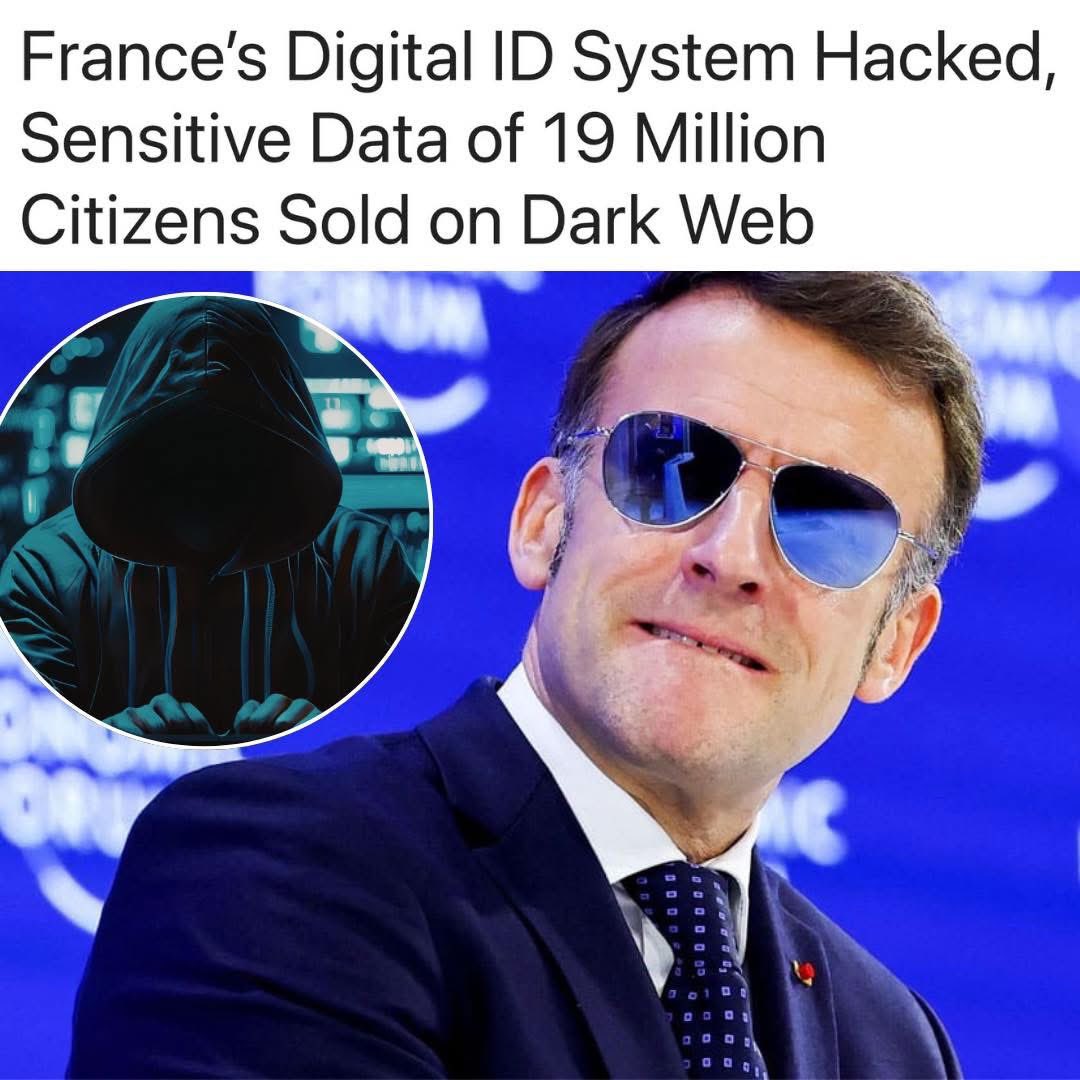
 🚨 BREAKING: France’s Digital ID System Hacked—Sensitive Data of 19 Million Citizens Now Sold on the Dark Web
France’s centralized digital identity platform, operated by France Titres (formerly ANTS), suffered a major breach on April 15, 2026.
Hackers stole records affecting roughly one-third of the French population and started auctioning them on dark web forums.
The exposed database contains:
• Full names
• Email addresses and phone numbers
• Dates and places of birth
• Postal addresses
• Unique government account IDs
This information gives criminals powerful tools for identity theft, phishing campaigns, synthetic identities, and large-scale financial fraud.
The system manages passports, national ID cards, driver’s licenses, residency permits, and vehicle registrations.
Officials confirmed no biometric photos or uploaded documents were taken, but the core personal data is now circulating.
Hackers operating under aliases like “breach3d” and “ExtaseHunters” posted the massive dump soon after th
 13
0
1.0K
13
0
1.0K
Price Prediction
When is a good time to buy CHEQ? Should I buy or sell CHEQ now?

Beacon Prediction
Probabilistic Price Forecast (Next 24 Hours)This prediction is an experimental technical product and is provided for reference purposes only. It does not constitute investment advice. Unexpected real-world events may significantly impact market behavior. Traders should make decisions with caution.