
Check you what is RedStone live!
Great explanation made by my friend ♥️
Rewards
Futures Daily Draw
100% Chance To Win With Daily Trades
Spot Daily Draw
Win 8,888 USDT In Grand Prizes
Mobile Top-Up
Top up mobiles easily, online, secure
Send
Send money globally, fast and secure
BitMart Mall
Live on crypto

Raini Studios Token (RST)
--
0%
24H
Raini Studios Token RST Price History USD
Track the price of Raini Studios Token for today, 7 days, 30 days and 90 days
Period
Change
Change (%)
Today
--
--
7days
--
--
30days
--
--
90days
$ 0.069
-99.77%
Own RST Now
Buy and sell RST easily and securely on BitMart.
Raini Studios Token Market Information
$ 0.00014 24h Range $ 0.13
All time high
$ 0.13
All time low
$ 0.00014
24h Change
24h Vol
0
Circulating supply
0.00
RST
Market cap
0
Max supply
1.00B
RST
Fully diluted market cap
0
Trade RST
Raini Studios Token X Insight

Potato13
Community_Lead
Influencer
B
 3.3K @0xPotato_13
 Extremely Bullish
RedStone Live as an innovative oracle provides flexible, 24/7 verifiable data for DeFi.

monster.♦️ D
496 @HutsolD The old market data matrix wasn't built for today's markets. RedStone Live is rewriting the code.
For years, builders have been forced to play by someone else's rules. Fixed feeds. Limited asset coverage. Long approval cycles whenever something new was needed.
That might have worked when markets were simpler.
But today's DeFi is expanding into tokenized equities, commodities, FX, RWAs, and synthetic assets. Innovation is moving faster than traditional market data infrastructure ever expected.
That's why RedStone Live feels like such an important step.
Instead of forcing builders to adapt to predefined feeds, it lets the infrastructure adapt to the builders.
Need a new asset? Add it.
Need your own aggregation methodology? Configure it.
Need market hours or additional context? Extend the feed.
Need pricing after traditional markets close? RedStone Live keeps delivering data 24/7.
And every update is cryptographically signed and fully verifiable.
One sentence from the announcement perfectly cap
 3
3
 0
0
 137
137
2026-07-05 19:37
Trend of RST after release
Extremely Bullish
RedStone Live as an innovative oracle provides flexible, 24/7 verifiable data for DeFi.
Potato13
Community_Lead
Influencer
B
3.3K @0xPotato_13 Bullish
RedStone report: RWA has moved beyond the experimental phase and will become a programmable capital layer; compliance and capital rotation are key.
Few weeks ago RedStone dropped Tokenization Report 📜
I would love to bring you some details from it ❤️
The latest Tokenization & RWA Standards report by @redstone_defi marks a definitive end to the "experimentation phase" of Real-World Assets. We are no longer just putting paper assets on a blockchain. We are witnessing the birth of a global, programmable capital layer where RWAs function as active, composable collateral within DeFi.
The report clarifies that the hardest part of tokenization isn't the "minting" ( it's easy to tokenize something in theory ) it’s the compliance logic. The industry is currently split on where this logic should live:
- In-Token Logic (e.g., ERC-3643): Compliance is hardcoded, ensuring the asset carries its rules wherever it goes.
- Network-Level Control: Used by institutions like WisdomTree or via Solana’s Token-2022 extensions.
- External Logic: Where compliance is handled by third-party identity oracles.
Author of the report identifies that the RWA market is no longer a monolith. Instead, it is splitting into four distinct operating models, each trying to solve the same puzzle:
How do you satisfy regulators without killing "DeFi’s magic"?
1. Manager-controlled:
The issuer controls everything: whitelists, transfers, access. Maximum legal safety, but creates silos that don’t integrate well with permissionless DeFi.
2. Institutional operating systems:
Think “Windows” or “iOS” for tokenization (e.g. Securitize, KAIO). Scalable and compliant, but users are locked into walled gardens.
3. Standards-first
Built around open protocols like ERC-3643. Goal: become the TCP/IP of RWAs. Best shot at true composability across DeFi.
4. Fully integrated stacks
End-to-end players (e.g. Ondo, Figure). They handle everything, from legal to distribution. Seamless UX and capital efficiency, but high trust in a single provider.
The strategic tension remains the same across all four: The more compliance you bake in, the harder it becomes to plug into DeFi. The "Holy Grail" of 2026 is finding the technical breakthrough that allows for Institutional-Grade Compliance at the minting stage, while maintaining Permissionless Composability at the trading stage.
Another key topic in report is the dynamic Capital Rotation.
The data from the report reveals a fascinating shift in behavior. Onchain allocators are no longer just keeping money in same place, they are actively managing portfolios.
For example - Tokenized T-bill deposits on Morpho saw a massive 92% drop, while tokenized gold (like XAUT or PAXG) grew 7x over the same period. This proves that RWA holders are rotating assets based on macro conditions (inflation, interest rates) just like traditional hedge fund managers, but with the speed and transparency of blockchain.
For me the RWAs are the future of web3 markets.
As people more and more want to trade 24/7 on not overregulated market.
What are your takes on RedStone report?
Read it ( link in comment ) and let me know.
Potato13
Community_Lead
Influencer
B
3.3K @0xPotato_13 @redstone_defi https://t.co/WsfqEebhea
16
8
163
2026-04-13 08:37
Trend of RST after release
Bullish
RedStone report: RWA has moved beyond the experimental phase and will become a programmable capital layer; compliance and capital rotation are key.
Potato13
Community_Lead
Influencer
B
3.3K @0xPotato_13 Extremely Bullish
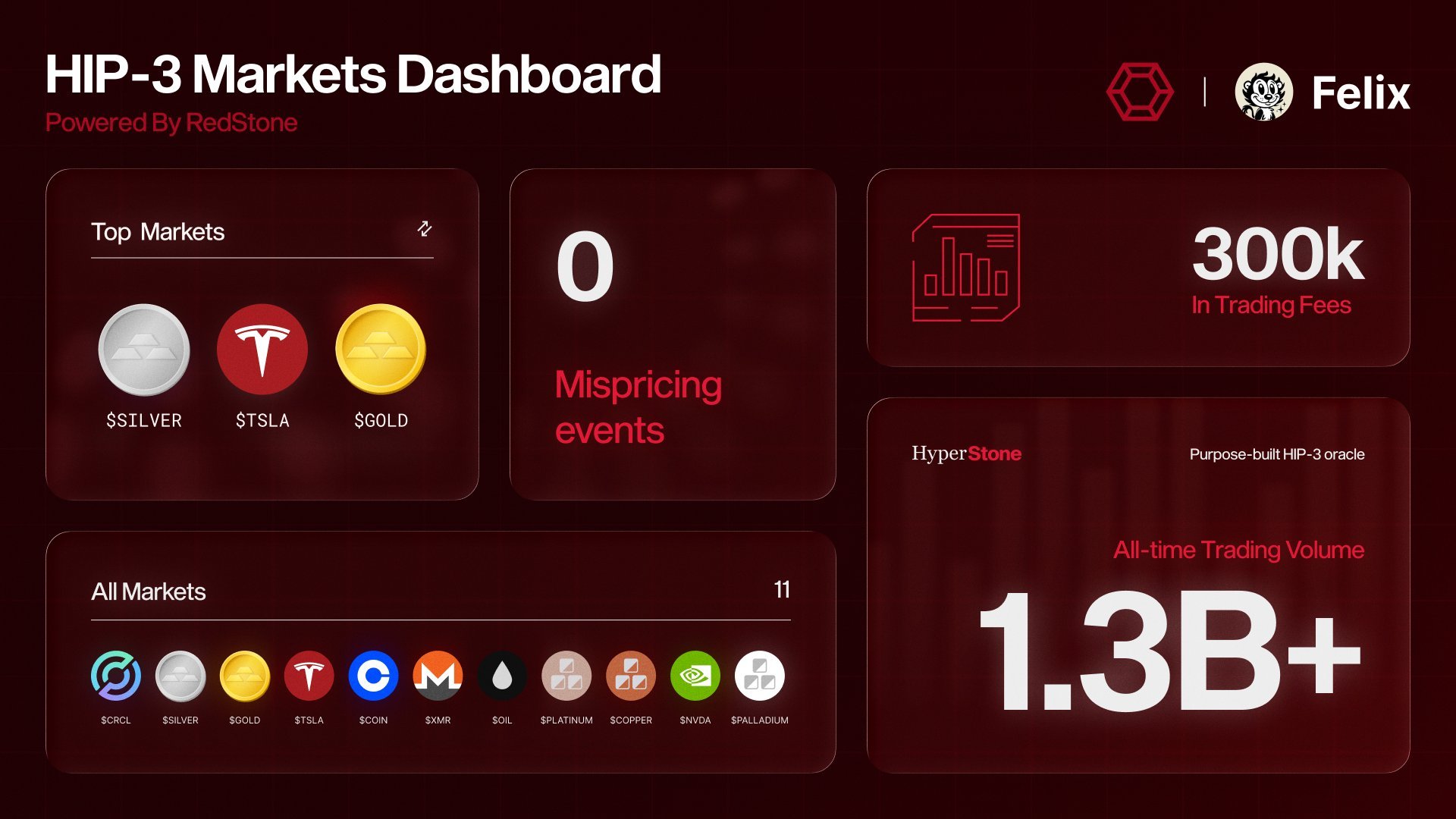
RedStone performed excellently in February, the HyperStone model processed over $1.3 billion in trading volume with zero errors, and actively expanded new partnerships.
RedStone February Recap
I could sum up last month in just few words - "As always @redstone_defi team delivered good shit!"
But I want to say some more words, about what was delivered by the team!
1. HyperStone.
The HyperStone model has once again proven its resilience and scalability. Hip-3 markets secured by RedStone’s data feeds officially surpassed $1.3 Billion in trading volume. I wouldn't surprise you but, they done it all with zero mispricing events!
The top-performing markets were:
$Gold
$Silver
$TSLA (Tesla Stock)
All of these assets were trading on @felixprotocol , bringing Real-World Assets into the DeFi space.
2. ERC-8004 & On-chain Agents
Where something new dropping in web3, RedStone team is always keeping an eye on this!
In collaboration with @CredoraNetwork , RedStone have already fitted their products to support the unique needs of autonomous on-chain entities.
3. Consensus Hong Kong
The team headed to the vibrant tech hub of Hong Kong for @consensus_hk . It was an incredible opportu
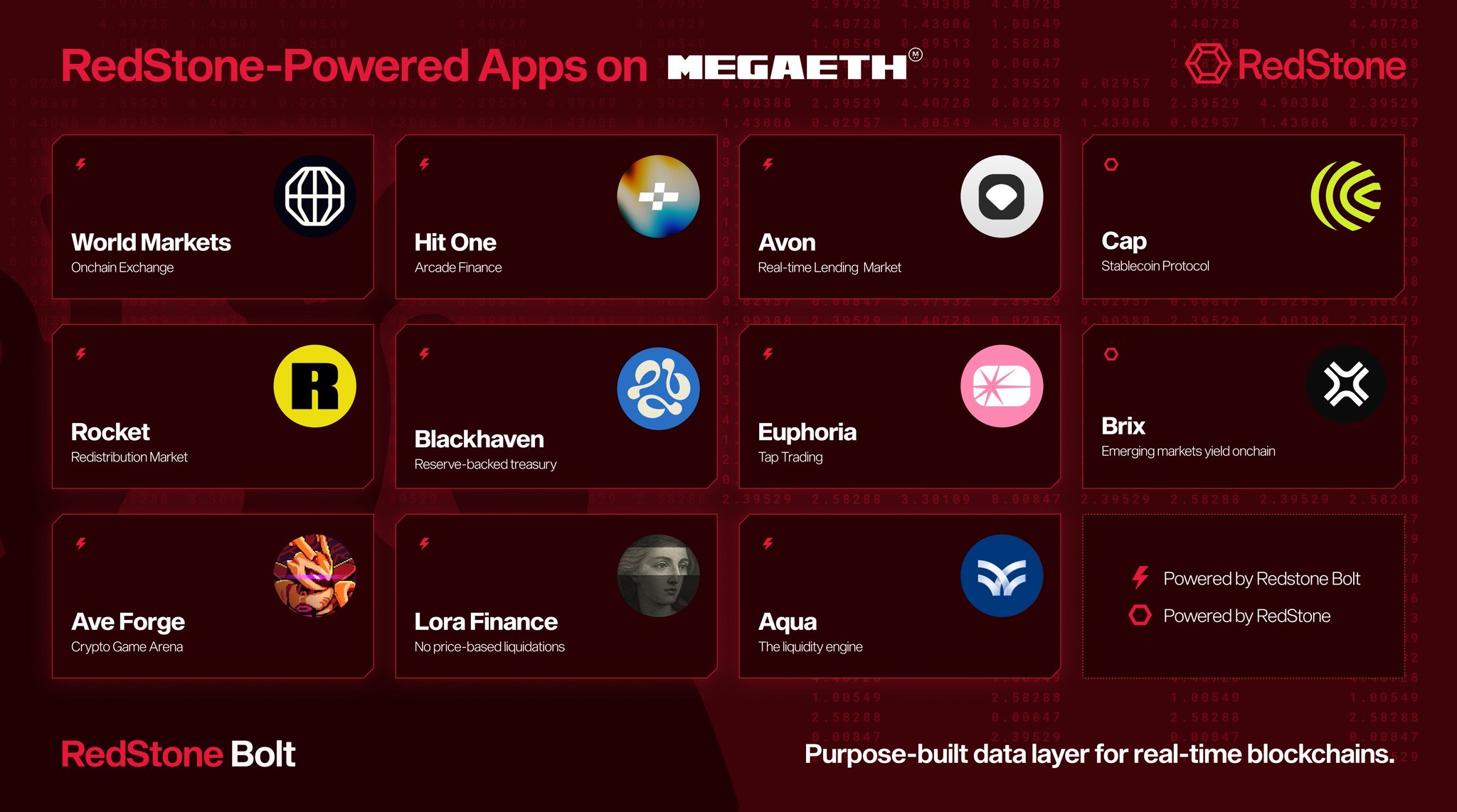 33
10
430
33
10
430
2026-03-05 14:27
Trend of RST after release
Extremely Bullish
RedStone performed excellently in February, the HyperStone model processed over $1.3 billion in trading volume with zero errors, and actively expanded new partnerships.
About Raini Studios Token
Raini Studios Token (RST) is a cryptocurrency launched in 2021and operates on the Beam platform. Raini Studios Token has a current supply of 1,000,000,000 with 0 in circulation. The last known price of Raini Studios Token is 0.00015872 USD and is up 0.00 over the last 24 hours. More information can be found at https://www.raini.io/.
Read More
Chain Explorer