93% of Web3 games died.
$12B+ disappeared chasing a future gamers never wanted.
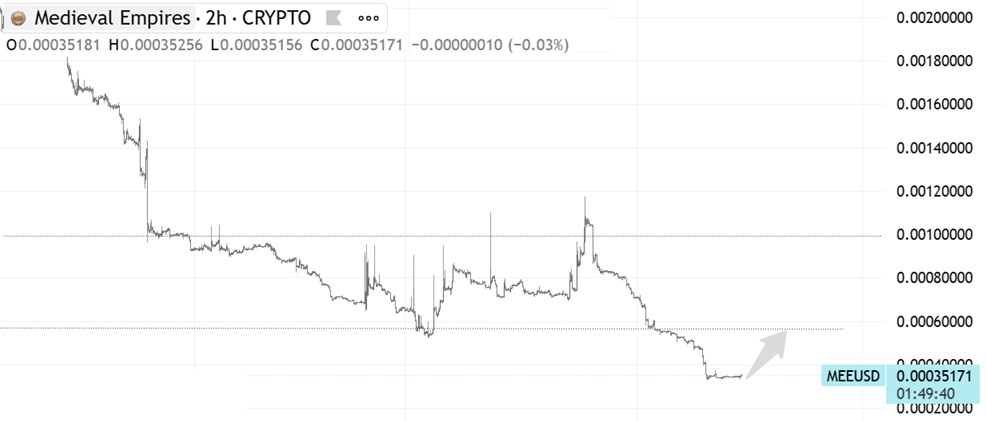
Yet projects like $MEE, $RMV and even Gunzilla’s Off The Grid are still shipping.
The survivors tell a very different story:
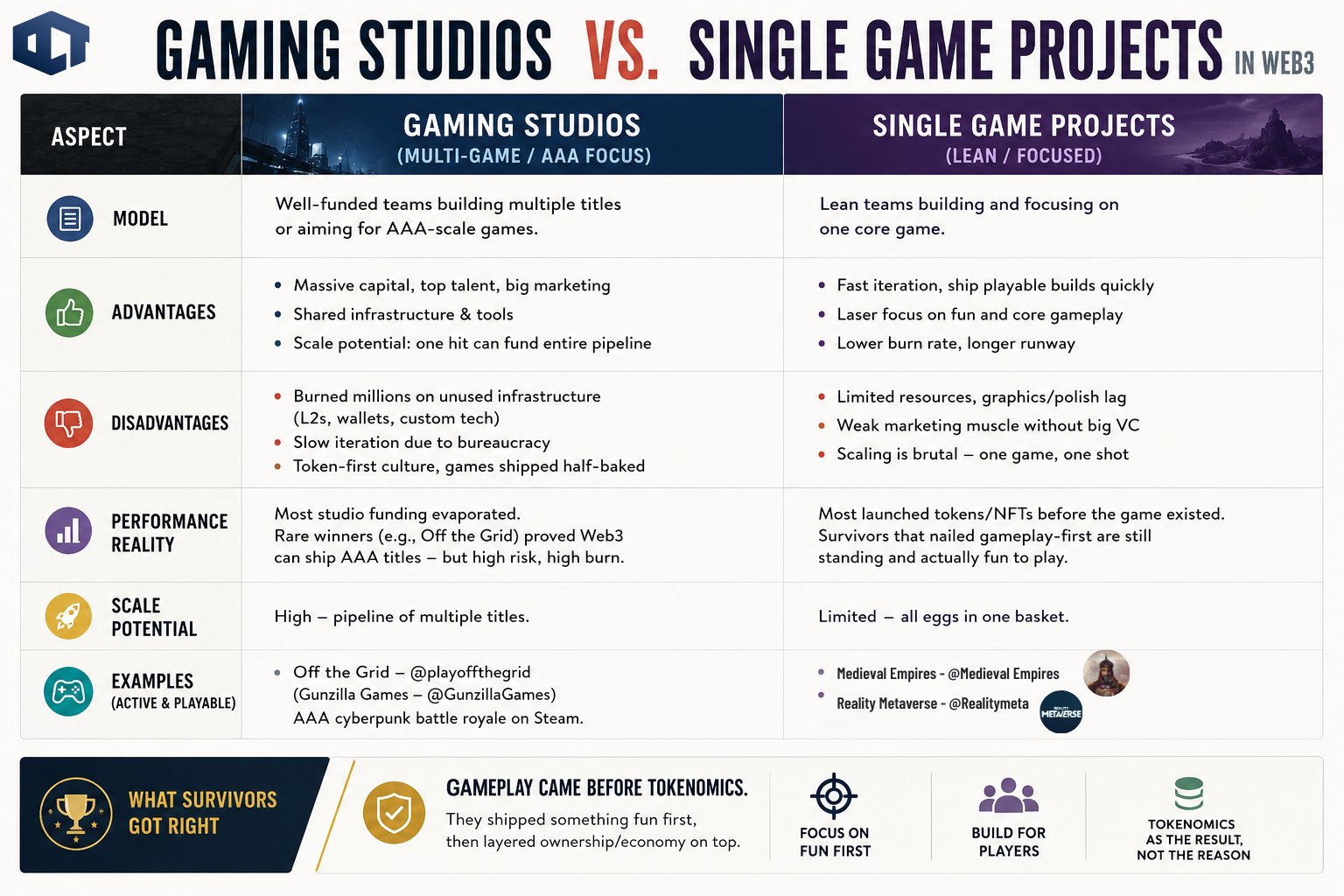
Studios and single-game projects failed for opposite reasons.
And the few still alive all share one trait:
Gameplay came before tokenomics.
Gaming studios looked unbeatable on paper:
• Huge funding rounds
• AAA ambitions
• Top talent
• Custom infrastructure
• Entire ecosystems under one roof
The idea was simple:
Build multiple games, own the chain, own the marketplace, own the economy.
The reality?
Many burned millions on Layer 2s, wallets, and tech stacks nobody used.
Iteration slowed.
Teams got bloated.
The token became the product while the game arrived half-finished.
Most funding vanished.
The rare exceptions proved another path.
Take Off The Grid (Gunzilla Games):
AAA cyberpunk battle royale. 150-player lobbies. Real shooter mechanics.
One of the first Web3 games to break into mainstream storefronts.
They prioritized gameplay.
Even then, scaling AAA remains brutally expensive.
Now compare that with single-game projects:
Smaller teams.
Less capital.
Fewer resources.
But:
• Faster iteration
• More player feedback
• Lower burn
• Focus on one gameplay loop instead of empire-building
Their weakness?
Many launched tokens and NFTs before the actual game existed.
Hype came first.
Players came later.
Often never.
Still, some survivors stand out:
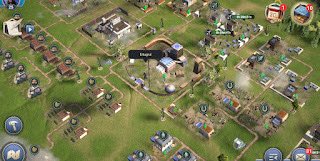
• @MedievalEmpires → Single-game strategy project set in 13th-century Turkey.
Think:
City building + army training + alliances + trading + PvE + upcoming large-scale PvP.
Playable across PC/Mac + mobile with cross-platform interoperability.
Interesting part:
The full game works without touching crypto. Players can ignore blockchain entirely OR:
• Own land
• Rent towns
• Stake $MEE
• Participate in the economy
Built on Immutable zkEVM + Polygon. Historical setting with Ertuğrul Gazi lore.
Unique edge:
Feels closer to an Age of Empires strategy experience than a "crypto game."
• @Realitymeta → Instead of building new audiences, they integrated Web3 into proven Web2 experiences.
Powering games like:
→ Landlord GO (7M+ users, geo-location real estate simulation using real cities/buildings)
→ Reality Rush (city-building + PvP + resource strategy)
→ Weather Challenge
→ Board-game IP integrations
Web2 users coexist with Web3 users.
No forced onboarding. No wallet barriers.
NFTs become in-game assets.
Tokens enable staking, governance, revenue-sharing.
Unique edge:
Real-world data + existing players + optional ownership.
The game comes first. Monetization comes later.
These projects survived because people could actually play them.
Not because tokenomics looked good.
The difference between studios vs single-game projects became obvious:
Studios:
Higher upside
Better polish
Bigger ecosystems
− Slow
− Expensive
− Infrastructure obsession
Single-game teams:
Faster shipping
Leaner execution
Gameplay focus
− Limited scale
− Less marketing
− One shot at success
Both failed when tokens came before fun. That’s the real lesson from the past cycle.
Web3 gaming isn't dead.
The version built around speculation is. The next winners probably won't market themselves as crypto games.
They'll just build games people want to play.