Rewards
Futures Daily Draw
100% Chance To Win With Daily Trades
Spot Daily Draw
Win 8,888 USDT In Grand Prizes
Mobile Top-Up
Top up mobiles easily, online, secure
Send
Send money globally, fast and secure
BitMart Mall
Live on crypto

Walrus Live Price data
Today's price of Walrus Is $ 0.039 (WAL/USD). With A Market Cap Of $ 104.68M USD. 24-Hour Trading Volume Of $ 5.62M USD, A 24-Hour Price Change Of +0.00%, And A Circulating Supply Of 2.62B WAL.
Walrus WAL Price History USD
Track the price of Walrus for today, 7 days, 30 days and 90 days
Period
Change
Change (%)
Today
$ 0
0.00%
7days
--
--
30days
--
--
90days
--
--
Own WAL Now
Buy and sell WAL easily and securely on BitMart.
Walrus Market Information
$ 0.039 24h Range $ 0.039
All time high
$ 0
All time low
$ 0
24h Change
0.00%
24h Vol
$ 5,615,852.82
Circulating supply
2.61B
WAL
Market cap
$ 104.68M
Max supply
5.00B
WAL
Fully diluted market cap
$ 199.97M
Trade WAL

Walrus X Insight

Philose 🦭
OnChain_Analyst
DeFi_Expert
B
 6.0K @Philose
 Bullish
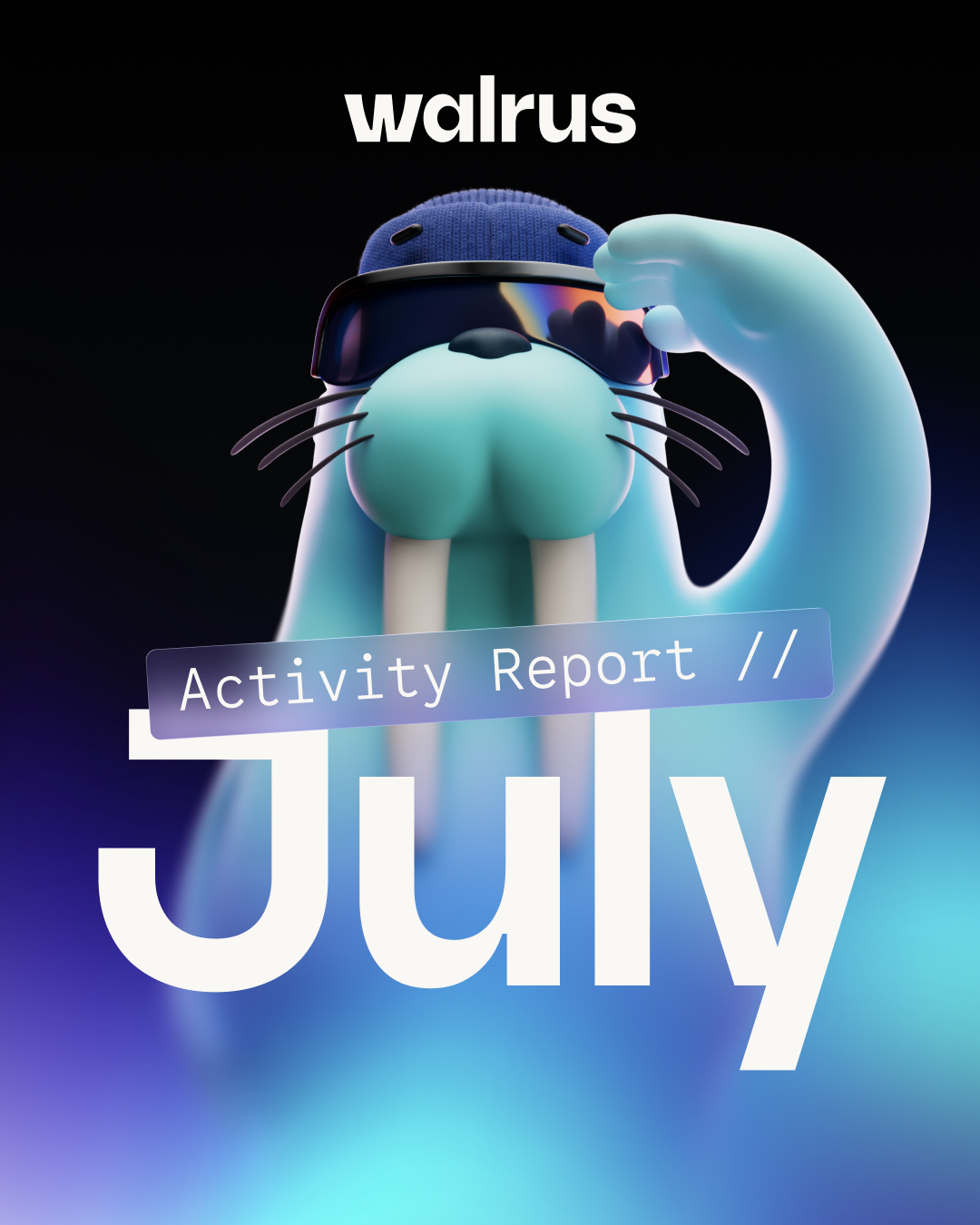
Walrus Protocol announced July progress, including Agent Skills and on-chain EV chargers, and mentioned the Sui conference.

Walrus 🦭/acc D
387.2K @WalrusProtocol From 14 new Agent Skills to 50k EV chargers onchain, July was about putting agent memory into production.
Here’s what shipped:
-Walrus Sessions 6 live with @inkray_io: write on portable agent memory and win $3,000 in WAL.
-14 new Agent Skills shipped across #ClaudeCode, Cursor, and Codex.
-@KhalaResearch broke down the real cost of agentic memory debt.
-@LighthouseWeb3 brought IPFS data directly to Walrus with zero migrations.
-@GoraeProtocol put 50,000+ South Korean EV chargers onchain with Walrus records.
-And finally, early-bird tickets for Sui Basecamp hosted by @SuiNetwork in Singapore (Oct 7–8) are live.
Reply, and we’ll send next month’s breakdown to your inbox.
Portable memory is moving fast. August goes EVEN FURTHER.
 110
110
 16
16
 12.5K
12.5K
2026-08-01 02:57
Trend of WAL after release
Bullish
Walrus Protocol announced July progress, including Agent Skills and on-chain EV chargers, and mentioned the Sui conference.
Philose 🦭
OnChain_Analyst
DeFi_Expert
B
6.0K @Philose Bearish
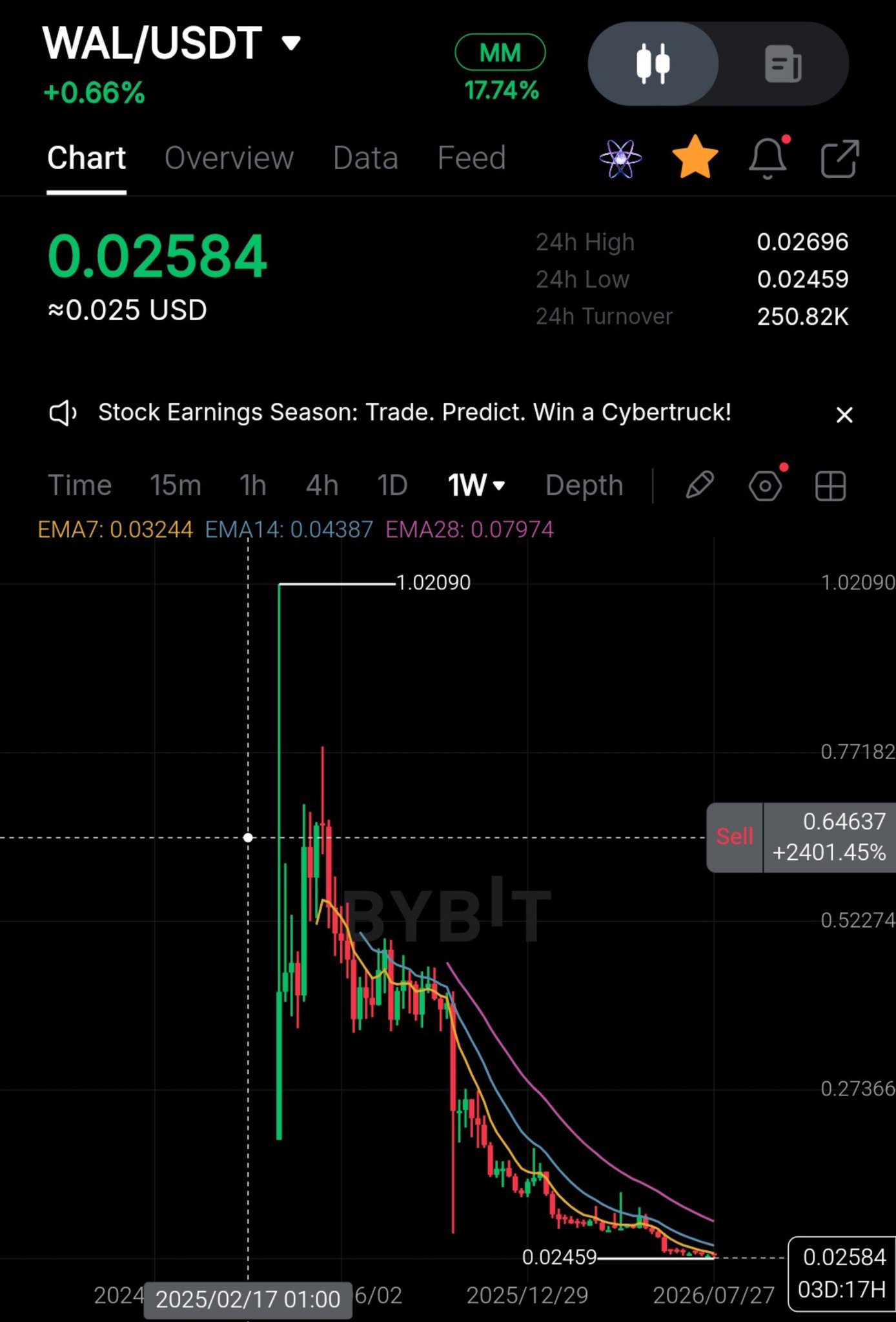
WAL token price has fallen sharply from the TGE peak, needing a 25x increase to break even.
Philose 🦭
OnChain_Analyst
DeFi_Expert
B
6.0K @Philose $WAL needs at least a 25x to get TGE prices.
Will the token price meet up to the amazing achievements made by the storage protocol? 🦭 https://t.co/HUaXzoFh2m
 35
13
1.4K
35
13
1.4K
2026-07-30 06:27
Trend of WAL after release
Extremely Bearish
WAL token price has fallen sharply from the TGE peak, needing a 25x increase to break even.
Philose 🦭
OnChain_Analyst
DeFi_Expert
B
6.0K @Philose Extremely Bearish
WAL token price has fallen sharply from the TGE peak, needing a 25x increase to break even.
$WAL needs at least a 25x to get TGE prices.
Will the token price meet up to the amazing achievements made by the storage protocol? 🦭 https://t.co/HUaXzoFh2m
35
13
1.4K
2026-07-30 06:17
Trend of WAL after release
Bearish
WAL token price has fallen sharply from the TGE peak, needing a 25x increase to break even.
Price Prediction
When is a good time to buy WAL? Should I buy or sell WAL now?
When deciding whether it’s a good time to buy or sell Walrus (WAL), it’s important to first align with your own trading strategy and risk profile.Long-term investors and short-term traders often interpret market conditions differently, so your decision should reflect your personal approach. According to the latest WAL 4-hour technical analysis, the current trading signal is Hold.

Beacon Prediction
Probabilistic Price Forecast (Next 24 Hours)Beacon Prediction Disclaimer
The data results displayed on this page are analyzed based on actual trading data (OHLCV) of the selected trading pair along with corresponding technical indicators.
This prediction is an experimental technical product and is provided for reference purposes only. It does not constitute investment advice. Unexpected real-world events may significantly impact market behavior. Traders should make decisions with caution.
This prediction is an experimental technical product and is provided for reference purposes only. It does not constitute investment advice. Unexpected real-world events may significantly impact market behavior. Traders should make decisions with caution.
About Walrus
Walrus (WAL) is a cryptocurrency launched in 2025and operates on the Sui Network platform. Walrus has a current supply of 5,000,000,000 with 2,617,291,667 in circulation. The last known price of Walrus is 0.03655983 USD and is up 4.94 over the last 24 hours. It is currently trading on 188 active market(s) with $4,320,469.89 traded over the last 24 hours. More information can be found at https://www.walrus.xyz.
Read More
Buy WAL
Trade WAL