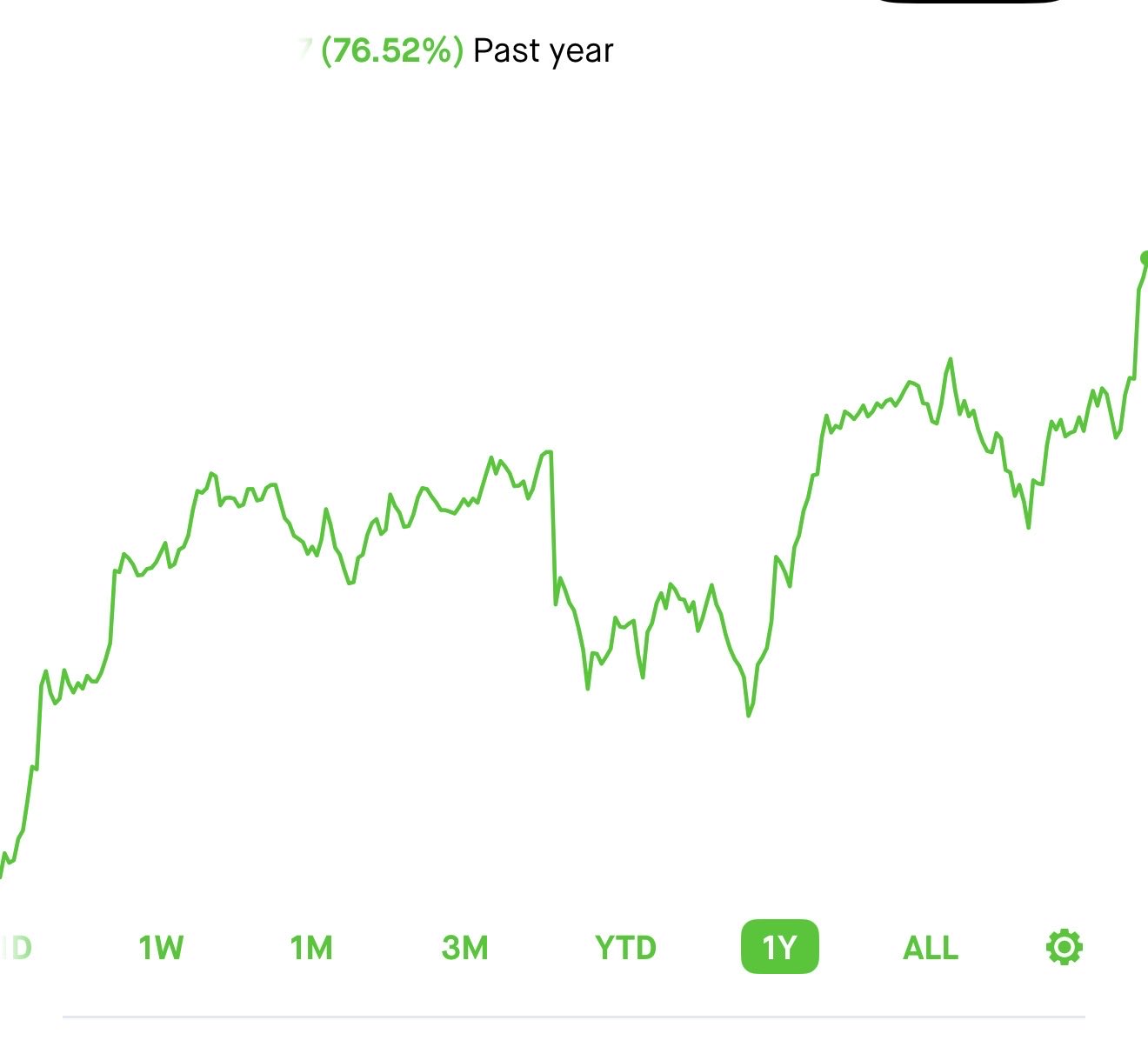
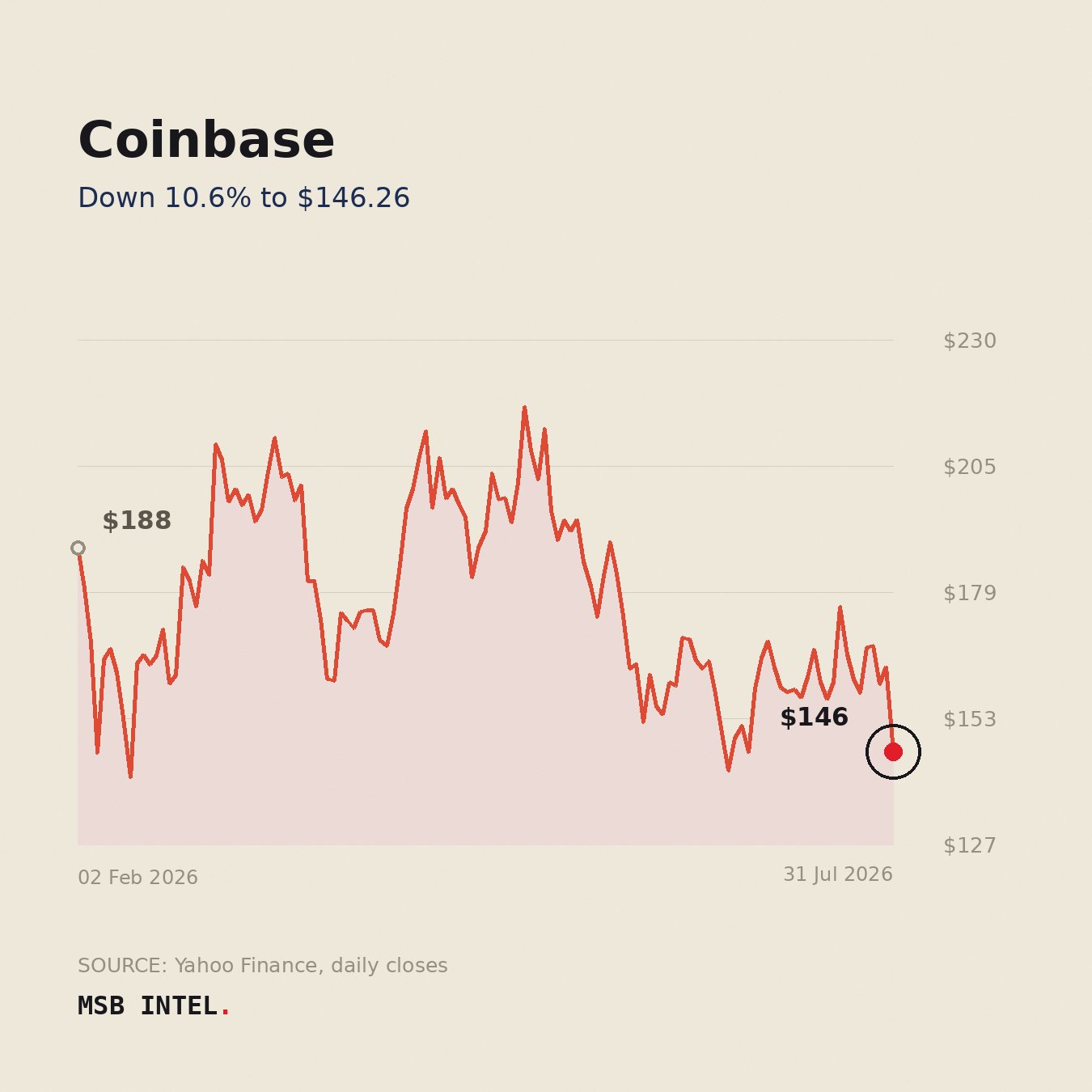
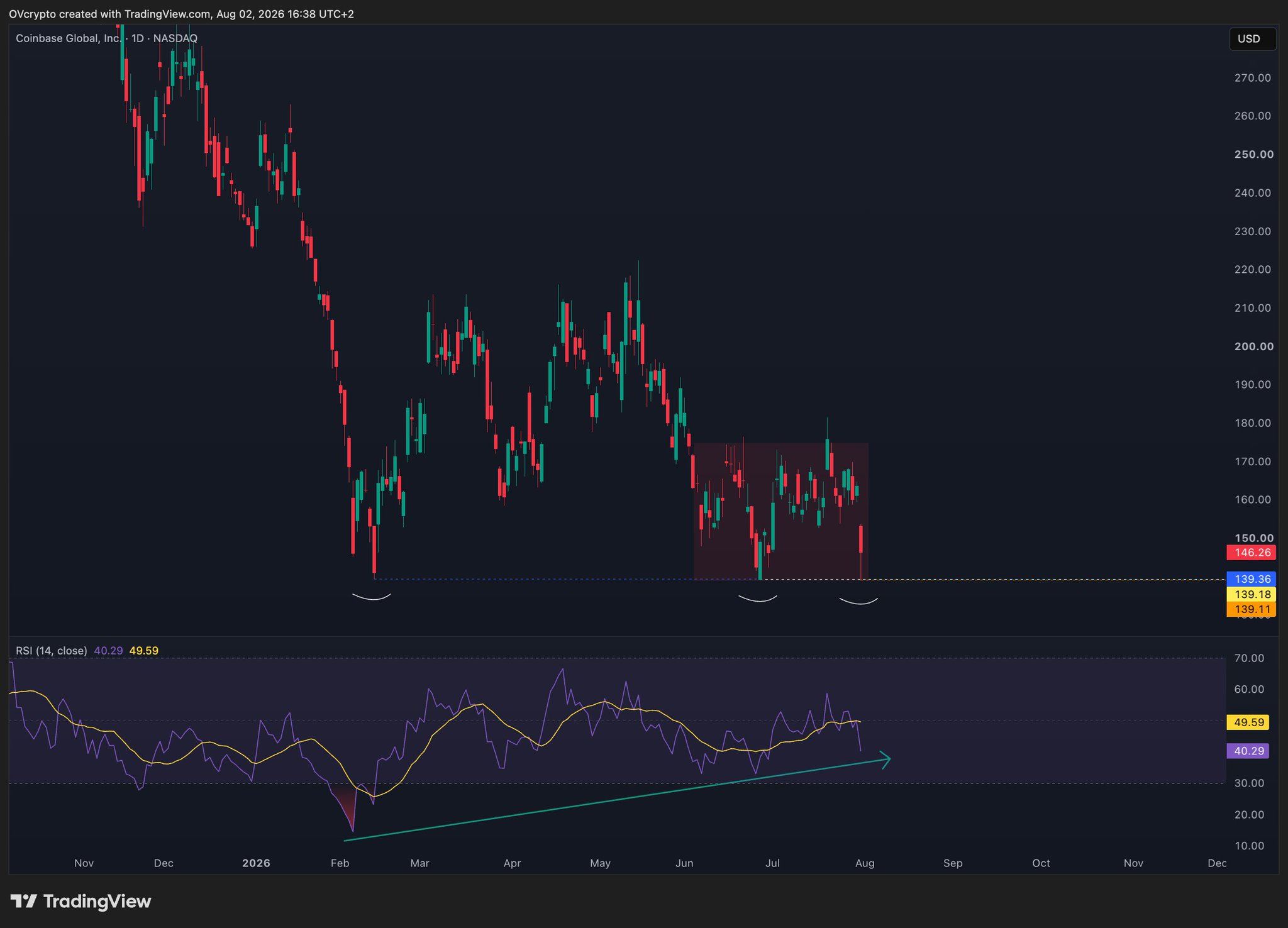
$65 Billion Investment Firm ‘William Blair’, cut Coinbase revenue estimates by 12% for 2026 & 13% for 2027. ✂️
Citing weak trading activity. 👀 https://t.co/NECAUfdUYu

$65 Billion Investment Firm ‘William Blair’, cut Coinbase revenue estimates by 12% for 2026 & 13% for 2027. ✂️
Citing weak trading activity. 👀 https://t.co/NECAUfdUYu
🚨LATEST: William Blair lowered its estimates for $COIN but maintained an Outperform rating.
The firm said the crypto trading slowdown is likely nearing its end, adding that Wall Street may still be too bearish on Coinbase, with Bitcoin's recovery seen as the primary catalyst. https://t.co/36B6nRyIe5
The more I look at tokenized stocks, the more I think liquidity and not the number of assets listed is the real differentiator.
Most platforms can give you exposure to the same names.
The real question is what happens when you actually try to enter or exit a position, especially with meaningful size.
That is where @bitget’s rToken starts to stand out.
—
According to the liquidity comparison, rTokens showed roughly $326K of depth on $SPY versus about $6K from the deepest competitor. Also $QQQ was around $209K versus $9K, while $MSTR had roughly 9x more depth.
Those numbers will not matter equally to everyone.
On a small trade, execution across different platforms may feel almost identical. The spread might be slightly better here or there, and you may not notice much difference.
But once the order size increases, thin liquidity becomes expensive very quickly.
Your order begins moving through multiple price levels, the average fill gets worse, and the slippage quietly becomes part of your cost.
This is why I would not claim rTokens win every comparison.
Spreads also appear to be a mixed bag as
rTokens perform better on some assets like $NVDA and $COIN, while competitors may offer tighter pricing on names like $SPCX, $MU and $CRCL.
But depth seems to be where it consistently separates itself.
—
In my opinion, depth is the harder advantage to replicate because it determines whether the price displayed on the screen is genuinely available to you or only available for a very small order.
That is what good liquidity changes: cleaner fills, less slippage and more confidence that you can exit without the market moving heavily against you.
rTokens are also backed 1:1 by underlying shares, but the real edge here is not simply tokenizing the stock. It is connecting that product to enough real market liquidity for it to remain usable beyond tiny trades.
For active traders, larger portfolios and anyone trading during volatile periods, it can become the difference between getting the price you expected and paying an unnecessary execution tax.
Still, liquidity is only one part of the decision. Always compare the live spread, available depth, fees and product risks before placing the trade.