Rewards
Futures Daily Draw
100% Chance To Win With Daily Trades
Spot Daily Draw
Win 8,888 USDT In Grand Prizes
Mobile Top-Up
Top up mobiles easily, online, secure
Send
Send money globally, fast and secure
BitMart Mall
Live on crypto

Moca Network (MOCA)
$ 0.0099 (MOCA/USD)
0.00%
24H
Moca Network Live Price data
Today's price of Moca Network Is $ 0.0099 (MOCA/USD). With A Market Cap Of $ 42.33M USD. 24-Hour Trading Volume Of $ 2.71M USD, A 24-Hour Price Change Of +0.00%, And A Circulating Supply Of 4.23B MOCA.
Moca Network MOCA Price History USD
Track the price of Moca Network for today, 7 days, 30 days and 90 days
Period
Change
Change (%)
Today
$ 0
0.00%
7days
$ 0
0.00%
30days
$ 0.00090
10.01%
90days
$ 0.0015
18.76%
Own MOCA Now
Buy and sell MOCA easily and securely on BitMart.
Moca Network Market Information
$ 0.0099 24h Range $ 0.0099
All time high
$ 0.029
All time low
$ 0.0070
24h Change
0.00%
24h Vol
$ 2,706,162.36
Circulating supply
4.23B
MOCA
Market cap
$ 42.33M
Max supply
8.88B
MOCA
Fully diluted market cap
$ 88.88M
Trade MOCA

Moca Network X Insight

Animoca Ecosystem Insights
Researcher
Media
B
 11.4K @animocainsights
 Extremely Bullish
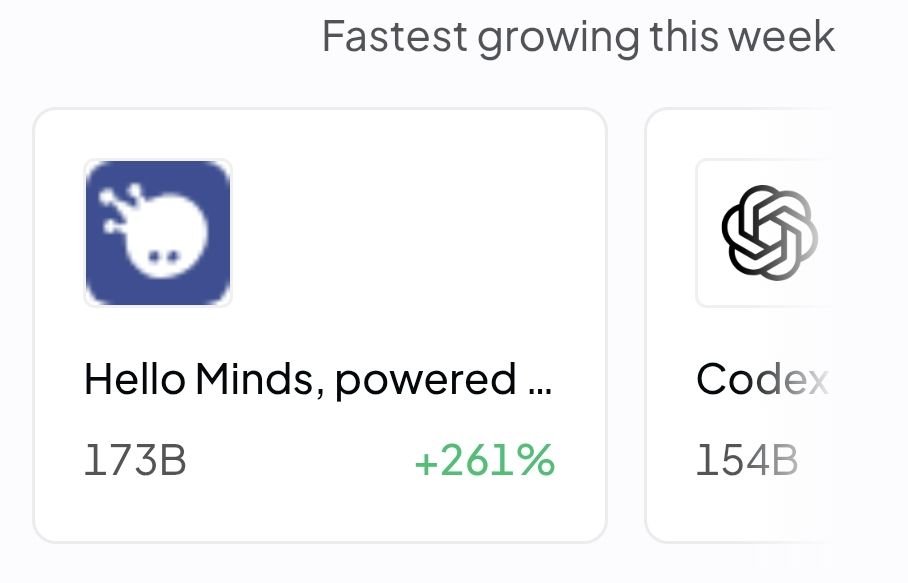
Hello Minds platform is growing rapidly, with a 261% increase this week, linked to the MOCA token.

Yat Siu D
165.6K @ysiu .@hellominds_ amongst the fastest growing agent platform together with @Ethoswarm $MOCA https://t.co/bHKW3MpRvK
 82
82
 7
7
 6.3K
6.3K
2026-07-19 11:37
Trend of MOCA after release
Extremely Bullish
Hello Minds platform is growing rapidly, with a 261% increase this week, linked to the MOCA token.

OGAudit🛡️Crypto Reviews
Security_Expert
Researcher
C
22.1K @OGAudit Neutral
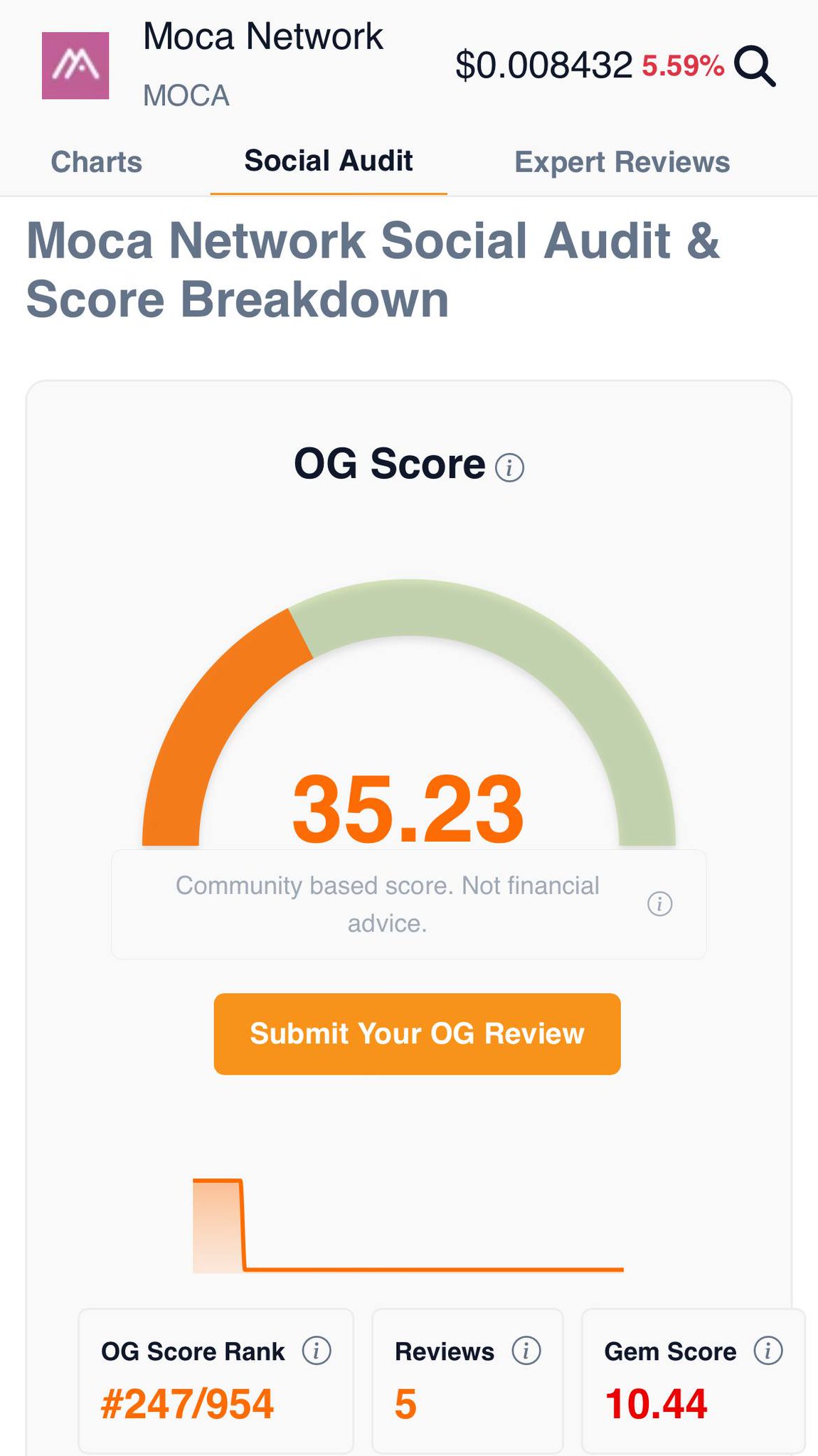
MOCA Network is building identity infrastructure, but token performance and core functionality development remain uncertain.
OGAudit Web3 Research: @Moca_Network $MOCA - Animoca’s Identity Layer or Still Just an NFT Community Token?
Moca Network is building chain agnostic digital identity infrastructure with direct access to Animoca’s 540+ portfolio companies and 700M+ addressable users:
- AIR Kit lets Web2 and Web3 apps embed universal accounts for identity, assets, and reputation which is already live inside SK Planet’s OK Cashbag app (South Korea’s largest loyalty program, issuing AIR accounts to millions of users) and integrated into Sony’s Soneium blockchain as of March 2025, positioning anime and entertainment IP as a Web3 identity testing ground.
- Moca Chain, an EVM compatible identity focused Layer-1 announced June 2025, remains in testnet with mainnet transition targeted for 2026 alongside MocaProof, a gamified credential verification platform still in beta that will reward users with MOCA upon its 2026 mainnet launch.
- MocaPortfolio (launched Q4 2025) lets MOCA and Mocaverse NFT stakers access token allocations from Animoca’s investment portfolio starting with Magic Eden (ME) tokens directly linking MOCA’s utility to Animoca’s broader deal flow rather than just Mocaverse itself.
Is real enterprise deployment through SK Planet and Sony’s Soneium, combined with direct exposure to Animoca’s portfolio via MocaPortfolio enough to justify a re-rating once Moca Chain reaches mainnet or does the token still trading 97%+ below its December 2024 high with core infrastructure still in testnet/beta, mean the identity pivot remains more promise than proof?
Category: Gaming / SocialFi
Coin Name: $MOCA
Circulating Supply: 4.23B
Market Cap: $36.47M
Market Cap Rank: #496
OG (Trust) Score: 35.23
OG Score Rank: #247/954
Reviewed by 5 OG Auditors.
See the Social Audit with Reviews by crypto OG’s and more on the $MOCA Coin page: ogaudit(.)com/crypto/mocaverse-moca
https://t.co/VdNUQPZ2n0

 9
0
510
9
0
510
2026-07-08 13:42
Trend of MOCA after release
Neutral
MOCA Network is building identity infrastructure, but token performance and core functionality development remain uncertain.

Cyriptoman4
TA_Analyst
Trader
B
27.6K @Cyriptoman4 Bullish
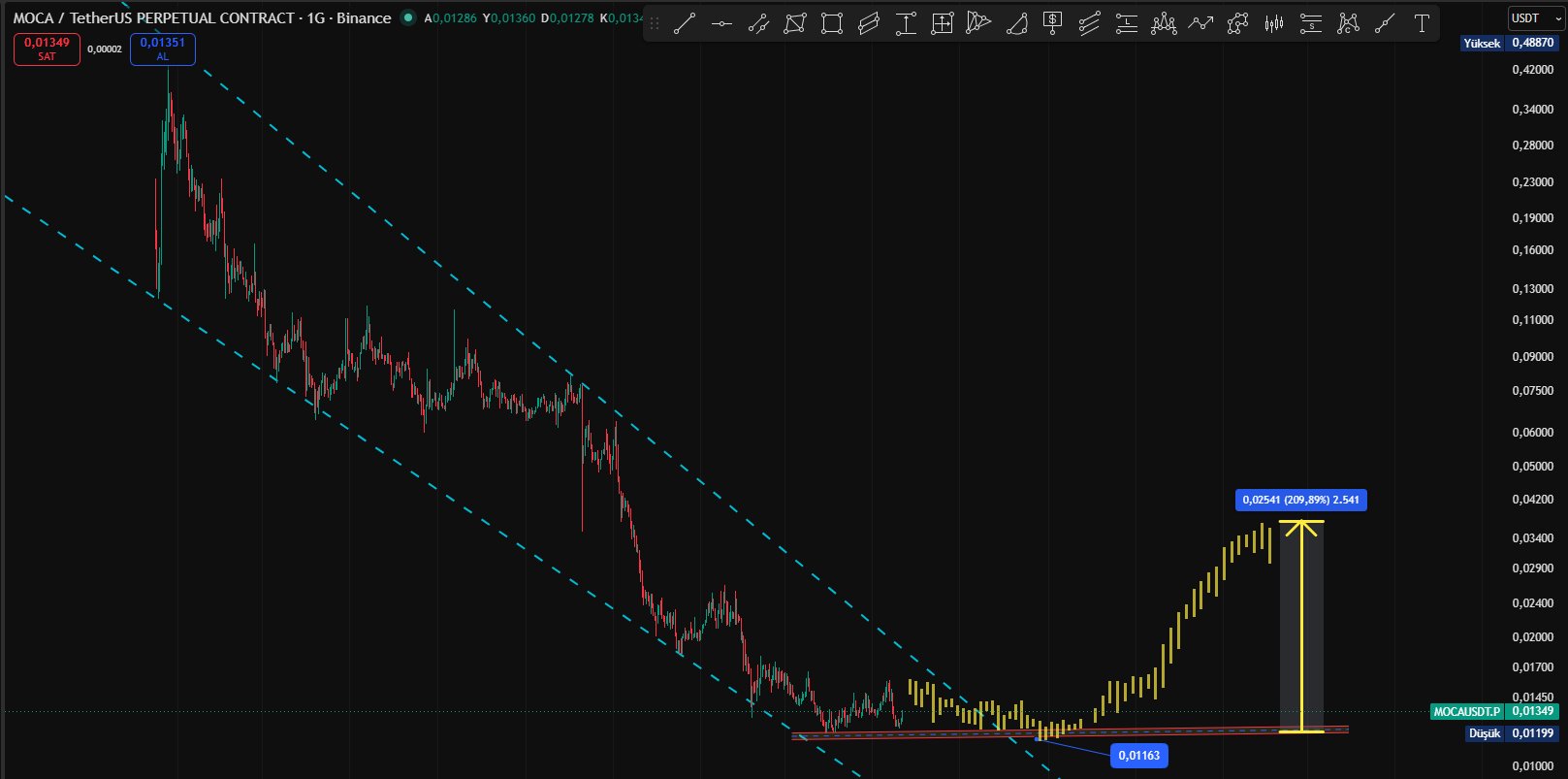
MOCA is currently trading at $0.0135, close to the $0.011-$0.012 support zone, and the chart predicts a strong upward potential.
📌 #moca currently trading at $0.01350 level.
Support Zone ;
✅ 0,011 $ / 0,012 $
Resistance Zone ;
🔴 0,015 - 0,025 $ first resistance
could be near the support zone... https://t.co/hWW6rTZ4o4
 108
3
2.0K
108
3
2.0K
2026-05-22 08:27
Trend of MOCA after release
Bullish
MOCA is currently trading at $0.0135, close to the $0.011-$0.012 support zone, and the chart predicts a strong upward potential.
Price Prediction
When is a good time to buy MOCA? Should I buy or sell MOCA now?
When deciding whether it’s a good time to buy or sell Moca Network (MOCA), it’s important to first align with your own trading strategy and risk profile.Long-term investors and short-term traders often interpret market conditions differently, so your decision should reflect your personal approach. According to the latest MOCA 4-hour technical analysis, the current trading signal is Hold. According to the latest MOCA 1-day technical analysis, the current signal is Hold.

Beacon Prediction
Probabilistic Price Forecast (Next 24 Hours)Beacon Prediction Disclaimer
The data results displayed on this page are analyzed based on actual trading data (OHLCV) of the selected trading pair along with corresponding technical indicators.
This prediction is an experimental technical product and is provided for reference purposes only. It does not constitute investment advice. Unexpected real-world events may significantly impact market behavior. Traders should make decisions with caution.
This prediction is an experimental technical product and is provided for reference purposes only. It does not constitute investment advice. Unexpected real-world events may significantly impact market behavior. Traders should make decisions with caution.
About Moca Network
Moca Network (MOCA) is a cryptocurrency and operates on the Ethereum platform. Moca Network has a current supply of 8,888,888,888 with 4,233,186,230.3425 in circulation. The last known price of Moca Network is 0.01064294 USD and is up 1.99 over the last 24 hours. It is currently trading on 139 active market(s) with $2,797,968.83 traded over the last 24 hours. More information can be found at https://moca.network/.
Read More