 LayerZero (ZRO)
- 62ソーシャル・センチメント・インデックス(SSI)-2.18% (24h)
- #78マーケット・パルス・ランキング(MPR)+20
- 1224時間ソーシャルメンション+71.43% (24h)
- 33%24時間のKOL強気比率8人のアクティブなKOL
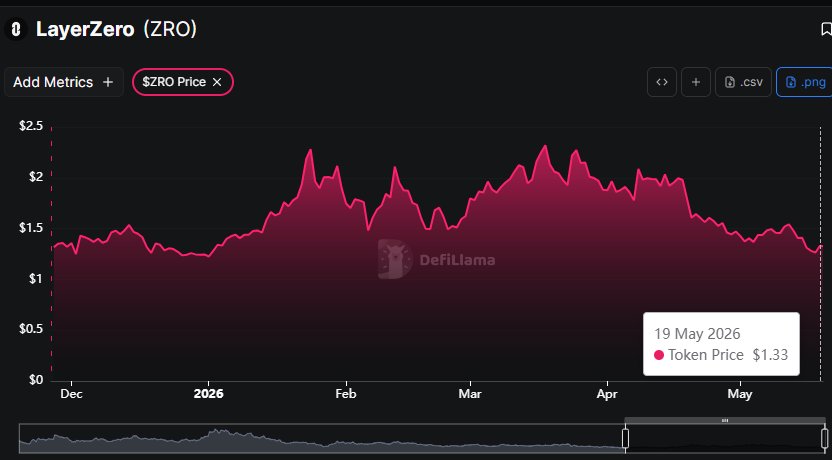
- 概要LayerZero security disclosure and fund migration cause anxiety, but price still modestly rises by 1.8%.
- 強気のシグナル
- Price rises 1.83%
- Release transparent incident report
- DVN diversification enhances security
- KOL praises transparency restoring confidence
- Liquidity increases due to unlock
- 弱気のシグナル
- Funds shift to Chainlink
- Daily active addresses drop to a three-year low
- KelpDAO vulnerability shows risk
- New release of $41 million into circulation
- Social heat decreases by 2.18%
ソーシャル・センチメント・インデックス(SSI)
- データ全体62SSI
- SSIトレンド(7日間)価格(7日間)センチメントの分布強気 (33%)中立 (8%)弱気 (25%)非常に弱気 (34%)SSIインサイトZRO social heat is moderate (61.63/100, -2.18%), activity is flat, sentiment down 29.17% dominates, KOL attention +37.5% driven by transparent report, corresponding to a modest 1.8% rise.
マーケット・パルス・ランキング(MPR)
- アラートインサイトZRO warning rank rises to #78 (+20), social abnormality 100/100, sentiment polarization 10.86/100, KOL attention 2/100, associated with security disclosure anxiety.
Xへの投稿
 DeFi Warhol DeFi_Expert OnChain_Analyst B52.01K @Defi_WarholDeFi Warhol DeFi_Expert OnChain_Analyst B52.01K @Defi_Warhol
The @KelpDAO exploit didn’t technically break @LayerZero_Core. But it did reveal that millions of dollars could depend on a single weak security checkpoint and that feelsbadman. Because if that checkpoint failed, user funds were at risk. And once the market saw that setup, $ZRO dropped. And because LayerZero’s FDV moves with the $ZRO price, FDV naturally followed. IMO, the takeaway here is simple: Cross-chain security is only as strong as the config behind it. And when people start questioning the security setup, the market reacts fast. Other projects should study this.
 51 13 4.68K オリジナル >リリース後のZROのトレンド弱気KelpDAO exploit exposed LayerZero security weakness, causing ZRO price drop.
- DeFi Warhol DeFi_Expert OnChain_Analyst B52.01K @Defi_Warhol
The @KelpDAO exploit didn’t technically break @LayerZero_Core. But it did reveal that millions of dollars could depend on a single weak security checkpoint and that feelsbadman. Because if that checkpoint failed, user funds were at risk. And once the market saw that setup, $ZRO dropped. And because LayerZero’s FDV moves with the $ZRO price, FDV naturally followed. IMO, the takeaway here is simple: Cross-chain security is only as strong as the config behind it. And when people start questioning the security setup, the market reacts fast. Other projects should study this.
51 13 4.68K オリジナル >リリース後のZROのトレンド弱気KelpDAO exploit exposed LayerZero security weakness, causing ZRO price drop.  Henryk Sarat Founder DeFi_Expert B1.22K @henryksarat
Kudos to LayerZero for publishing such a transparent report, including third-party audits. This is the kind of disclosure that makes the whole ecosystem stronger. Wild that the malware was delivered via a GitHub repo, and exactly why you can't trust a single source or single binary. No matter how clean anyone's opsec is, mistakes happen. Diversity is key here. LayerZero gives apps sovereignty over their security model through customizable DVNs. Each DVN has its own infrastructure, ops, implementation, and security assumptions, which makes it materially harder for an attacker to compromise multiple independent verifiers at once. Apps can require their own DVN in the verification quorum rather than fully inheriting a managed trust model, and operators can include custom code unique to them to strengthen security further. That flexibility is a massive architectural difference. People keep comparing LayerZero and CCIP at a superficial level. They're both good technologies, just different. Hard to see that unless you're actually in the weeds. The KelpDAO incident was unfortunate, but it was a 1/1 DVN configuration. Whatever happened there specifically didn't use the main architectural advantage LayerZero offers. If a Google DVN, or any second operator, had been added for a 2/2 or 3/3, we probably wouldn't be having this conversation.
 LayerZero D722.35K @LayerZero_Core
We’re sharing our completed post-mortem on the April 18th incident, prepared with @Mandiant and @CrowdStrike. We are publishing both an executive summary and the full report at the link below. Over the past four weeks, we’ve worked with hundreds of partners to help them understand their current security posture, and harden it where appropriate. We’ll continue this work, alongside taking additional proactive steps for the benefit of not only our partners, but also the ecosystem as a whole. We want to extend our thanks to our partners for their support and patience this past month. There’s a reason that over $12 billion has moved across the network in the past four weeks, and why the world’s most valuable asset issuers have stood by our side: they believe in us, in what the LayerZero protocol has to offer, and in the value of modular, isolated, application-controlled security. The work continues. And we look forward to continue showing up for the applications that trust us with their business, as well as the
 22 6 2.14K オリジナル >リリース後のZROのトレンド強気LayerZero transparent incident report, highlighting its security architecture advantages and ecosystem trust.
 Chris Barrett Media Influencer B19.72K @ChrisBarrett
 Zach Rynes | CLG Community_Lead Influencer A189.80K @ChainLinkGod
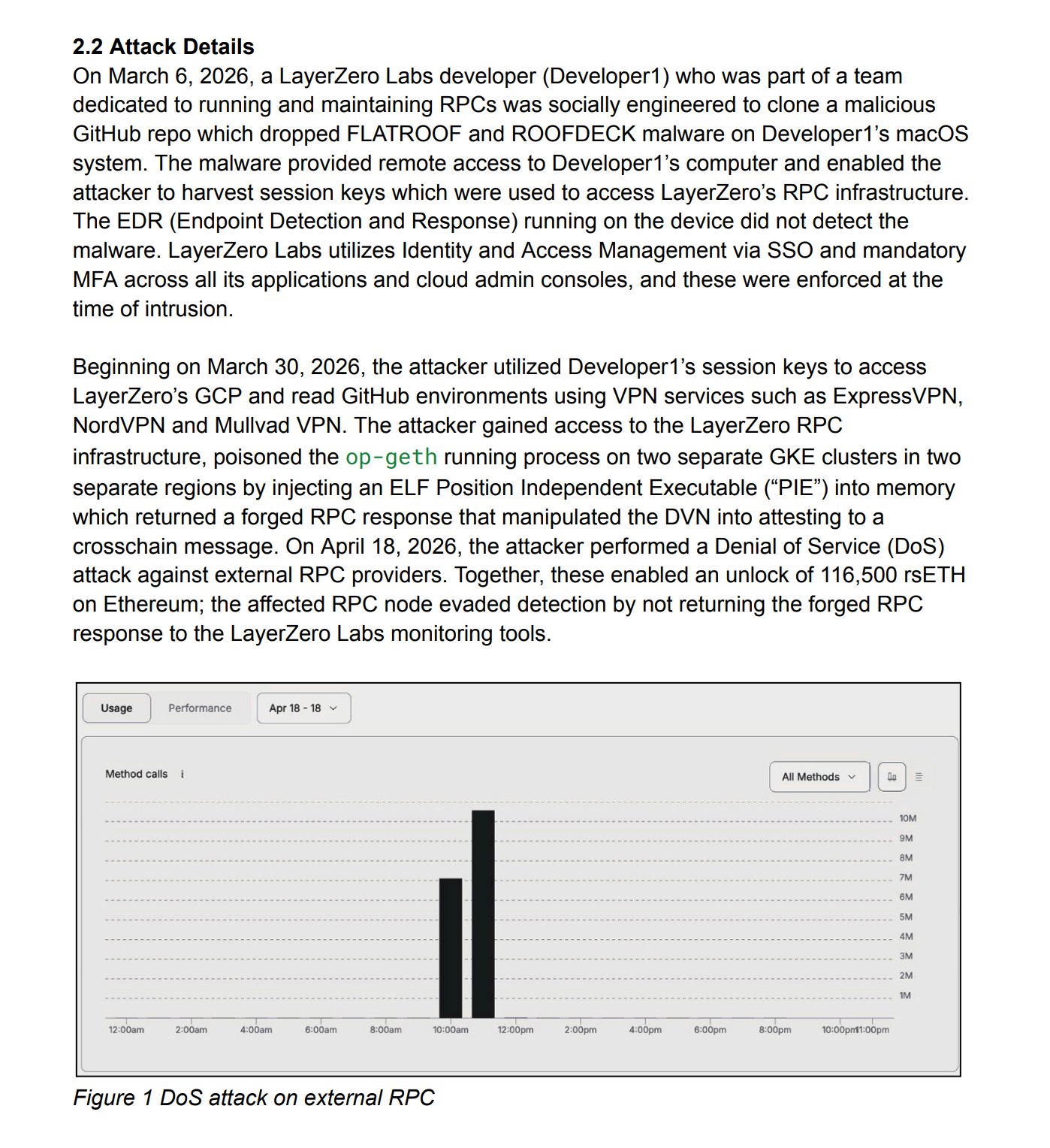
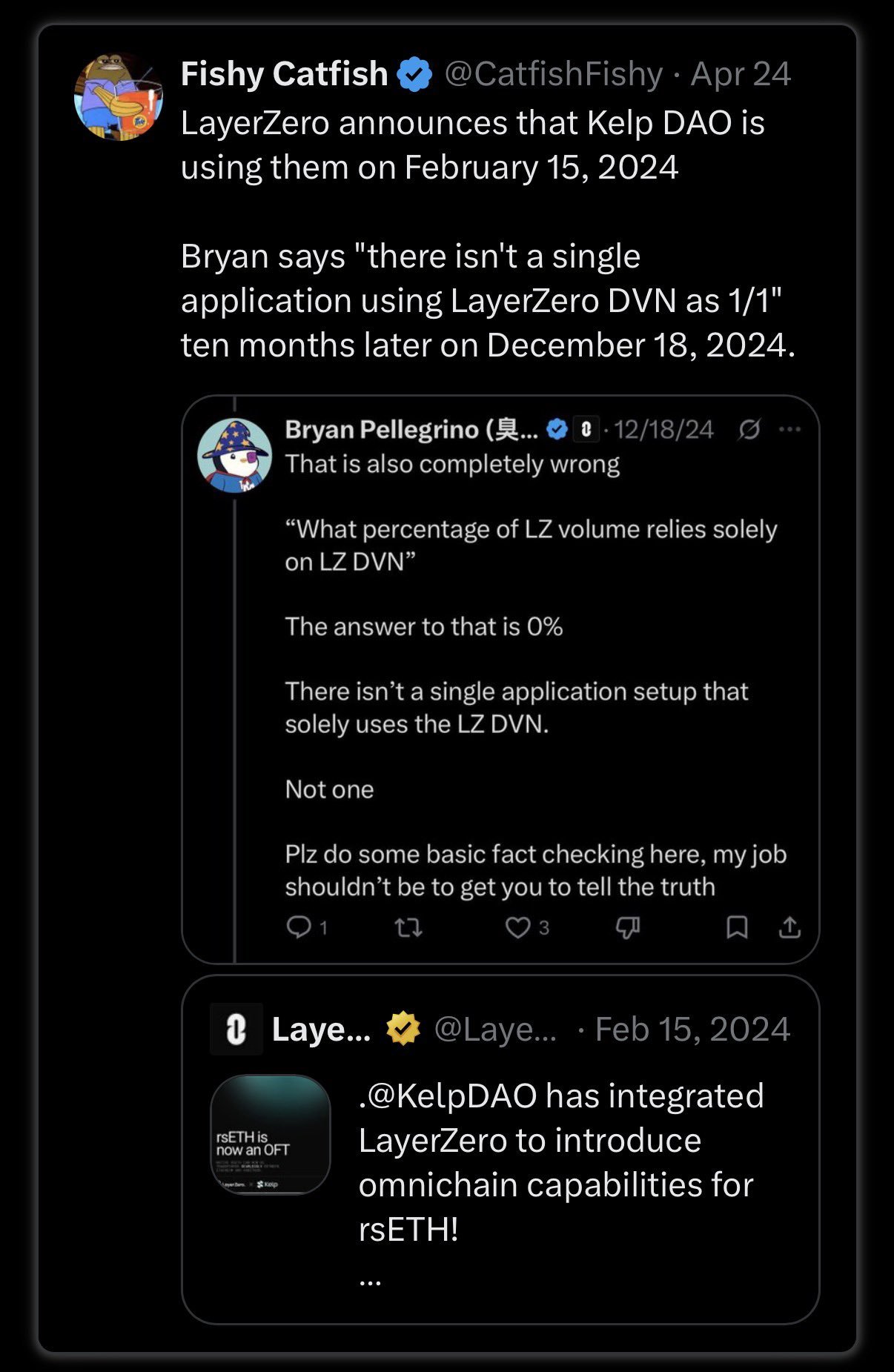
New post mortem confirms what we already knew: @LayerZero_Labs' centralized infrastructure was infiltrated by North Korean hackers, which resulted in the $292 million rsETH bridge exploit Turns out this required only a single engineer to be socially engineered, whose laptop was fully compromised for over 6 weeks without detection before exploit was executed, an insane single point of failure and lack of adequate monitoring This only builds on LZ Labs' extensive history of poor opsec, including trading memecoins like "McPepes" on production multisig keys, which weren't rotated for years and Bryan lied about and said was just "PEPE OFT testing" (3 keys on a 2-of-5 LZ Labs multisig were at risk of phishing attacks for years) And nevermind the fact I called out the EXACT centralization risk that resulted in the rsETH exploit 2 years ago, directly to Bryan, who lied and said no project was using LZ Labs DVN in 1-1 config (in reality, multiple projects were) Given it's now abundantly clear to anyone paying atte
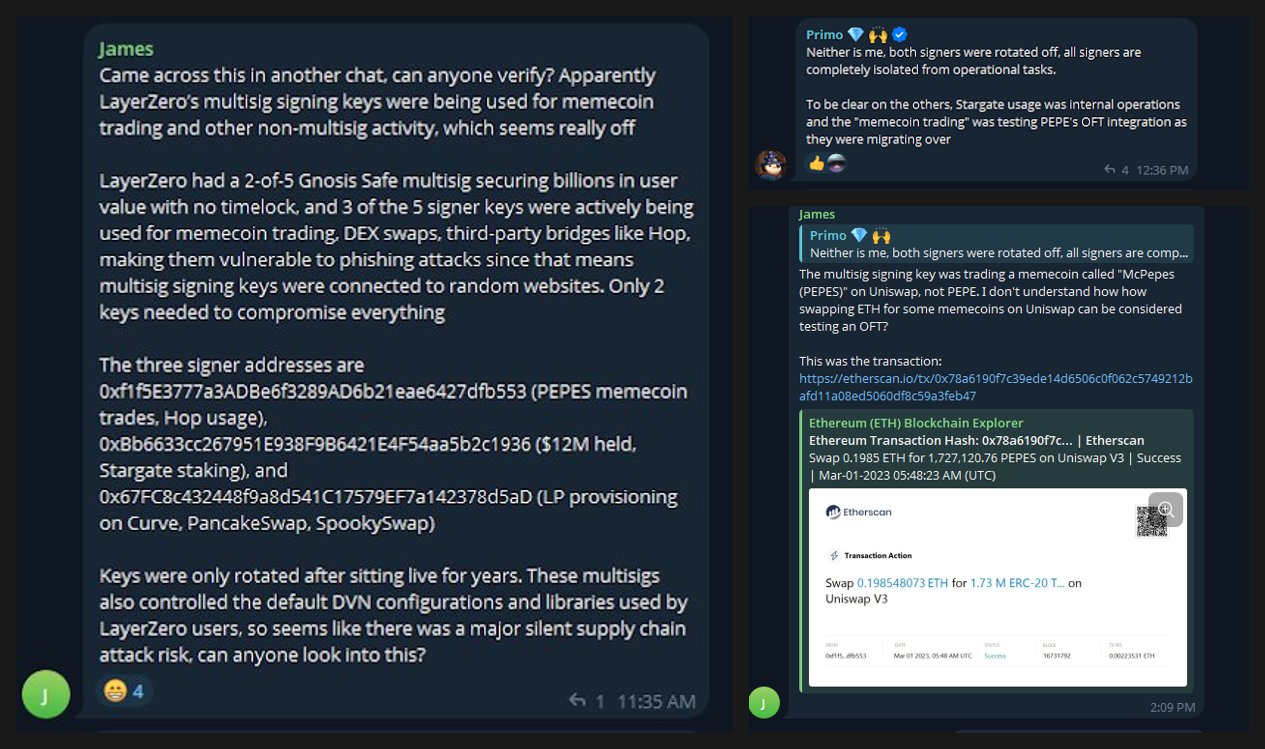
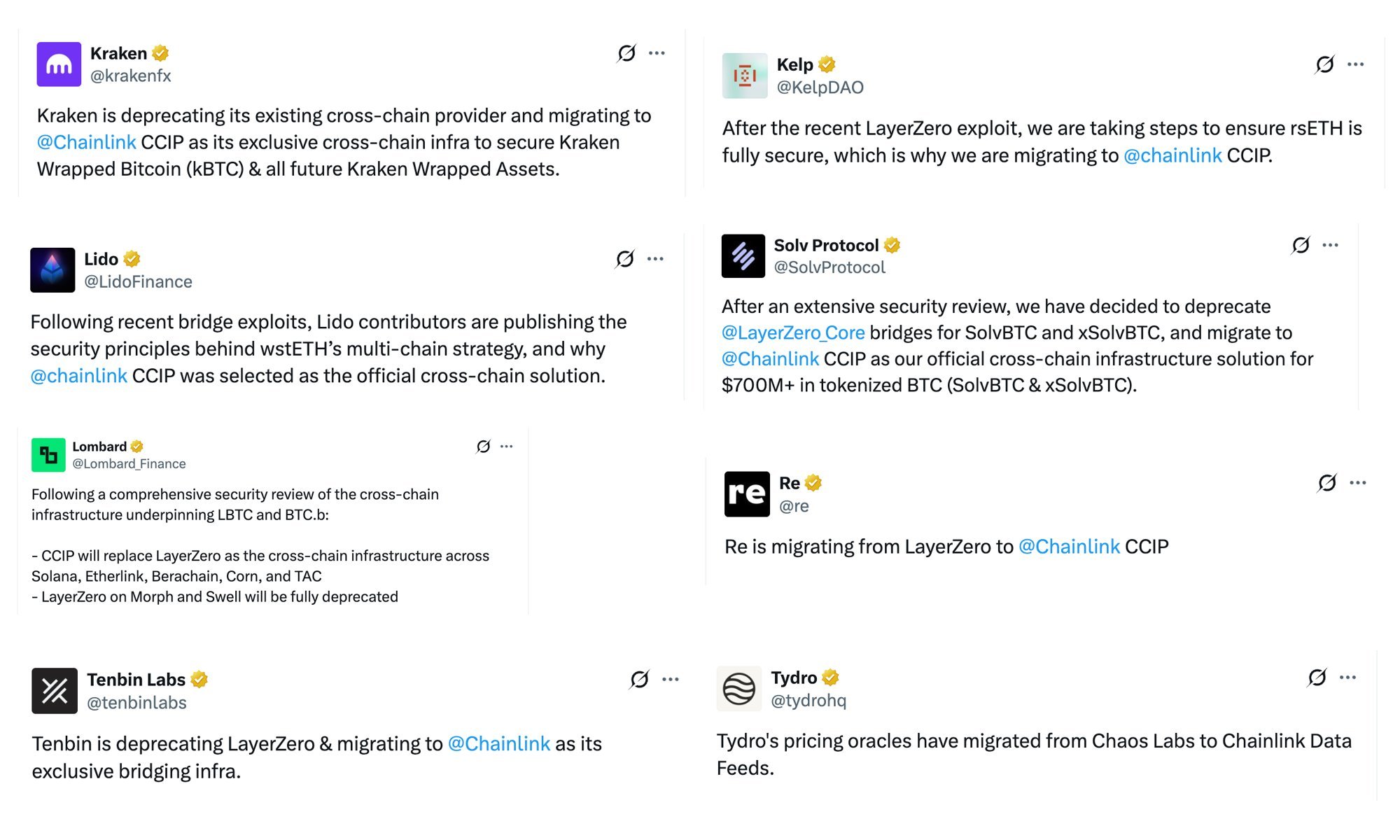 282 16 28.29K オリジナル >リリース後のZROのトレンド非常に弱気LayerZero security vulnerability leads to rsETH theft, multiple projects abandon it for Chainlink.
 Fishy Catfish OnChain_Analyst Security_Expert B15.04K @CatfishFishy
There is so much white-washed misdirection in this post. 1) LayerZero keeps saying that their "signer keys were not compromised", which is technically true, but means nothing. The attacker got the verifier to sign a fraudulent attestation using legitimate keys. From the destination contract's perspective, and from the victims' perspective, there is zero difference between a stolen key and a key tricked into signing fake data. The money is gone either way. The whole point of the signing system is to produce trustworthy signatures. It produced an untrustworthy one. 2) "There was no protocol-level failure." The contracts did what they were told. True! From a user's perspective, that distinction is meaningless: LayerZero Labs operates the DVN. LayerZero Labs operates the RPC infrastructure the DVN relied on. LayerZero Labs employed the developer who got phished. 3) Why was their system designed so that DoS-ing the external RPC providers caused fallback to internal-only? A robust design should fail closed (refuse to sign if you can't get diverse data), not fail open (sign based on whatever's still reachable). You should always prioritize safety over liveness. The remediation section now requires "Multi-Source RPC Quorum" with "explicit diversity requirements." That's an admission that the previous design had a known-bad failure mode that nobody fixed until $292M was gone. 4) The remediation section is, in a way, the most honest part of the document. Every item in section 4 — refusing 1-of-1, requiring multi-source RPC quorum, moving defaults to 3-of-3, shortening session tokens, requiring just-in-time privilege elevation, adding XDR — is implicitly an admission that the previous state of affairs was below bare standards and unsafe. They're describing fixes, but each fix is actually identifying a prior failure they don't quite call a failure in the narrative sections *and* could have simply not have been that way to begin with. The entire report's wording works hard to assign blame to Kelp and North Korea — leaving LayerZero Labs nominally responsible for nothing.
LayerZero D722.35K @LayerZero_CoreWe’re sharing our completed post-mortem on the April 18th incident, prepared with @Mandiant and @CrowdStrike. We are publishing both an executive summary and the full report at the link below. Over the past four weeks, we’ve worked with hundreds of partners to help them understand their current security posture, and harden it where appropriate. We’ll continue this work, alongside taking additional proactive steps for the benefit of not only our partners, but also the ecosystem as a whole. We want to extend our thanks to our partners for their support and patience this past month. There’s a reason that over $12 billion has moved across the network in the past four weeks, and why the world’s most valuable asset issuers have stood by our side: they believe in us, in what the LayerZero protocol has to offer, and in the value of modular, isolated, application-controlled security. The work continues. And we look forward to continue showing up for the applications that trust us with their business, as well as the
111 13 5.71K オリジナル >リリース後のZROのトレンド非常に弱気The author harshly criticizes the LayerZero incident report, accusing it of shirking responsibility and having serious design flaws.- Fishy Catfish OnChain_Analyst Security_Expert B15.04K @CatfishFishyZach Rynes | CLG Community_Lead Influencer A189.80K @ChainLinkGod
New post mortem confirms what we already knew: @LayerZero_Labs' centralized infrastructure was infiltrated by North Korean hackers, which resulted in the $292 million rsETH bridge exploit Turns out this required only a single engineer to be socially engineered, whose laptop was fully compromised for over 6 weeks without detection before exploit was executed, an insane single point of failure and lack of adequate monitoring This only builds on LZ Labs' extensive history of poor opsec, including trading memecoins like "McPepes" on production multisig keys, which weren't rotated for years and Bryan lied about and said was just "PEPE OFT testing" (3 keys on a 2-of-5 LZ Labs multisig were at risk of phishing attacks for years) And nevermind the fact I called out the EXACT centralization risk that resulted in the rsETH exploit 2 years ago, directly to Bryan, who lied and said no project was using LZ Labs DVN in 1-1 config (in reality, multiple projects were) Given it's now abundantly clear to anyone paying atte
282 16 28.29K オリジナル >リリース後のZROのトレンド非常に弱気LayerZero suffered a $292 million theft due to security vulnerabilities and poor operation, causing many projects to migrate to Chainlink.  The Defiant Media Influencer D283.29K @DefiantNews
BREAKING: @LayerZero_Core publishes KelpDAO incident report 1 month after the hack → Says Kelp downgraded from 2-of-2 to 1-of-1 DVN before the attack → Will refuse sole-signer role on any channel and introduces new 3-of-3 protocol default → No mention of compensation https://t.co/YR1Yzti2ST
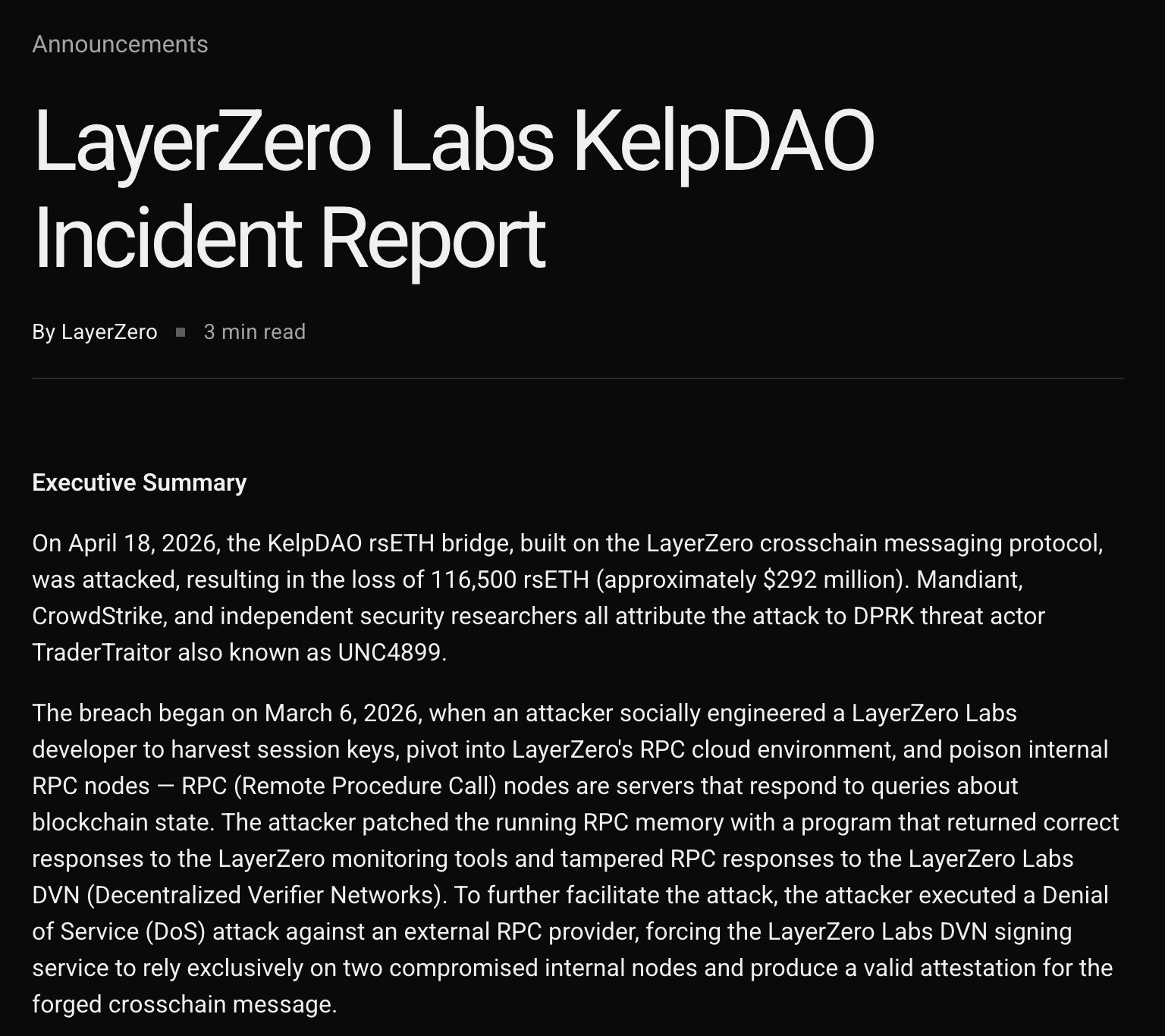 17 3 3.33K オリジナル >リリース後のZROのトレンド非常に弱気LayerZero releases KelpDAO incident report, discloses $292 million rsETH loss, and upgrades security protocol.
 토큰포스트 - TokenPost Korea Media Educator D5.80K @tokenpostkr
LayerZero “The Kelp DAO bridge attack was orchestrated by a North Korean hacking group” https://t.co/dDm9cOKukd https://t.co/qbGhiU3KCD
 0 0 23 オリジナル >リリース後のZROのトレンド弱気North Korean hacker groups are alleged to be the mastermind behind the LayerZero and Kelp DAO bridge attacks.
 Dami (the L0 guy) Security_Expert OnChain_Analyst A2.76K @rookie_of_PhLayerZero D722.35K @LayerZero_Core
We’re sharing our completed post-mortem on the April 18th incident, prepared with @Mandiant and @CrowdStrike. We are publishing both an executive summary and the full report at the link below. Over the past four weeks, we’ve worked with hundreds of partners to help them understand their current security posture, and harden it where appropriate. We’ll continue this work, alongside taking additional proactive steps for the benefit of not only our partners, but also the ecosystem as a whole. We want to extend our thanks to our partners for their support and patience this past month. There’s a reason that over $12 billion has moved across the network in the past four weeks, and why the world’s most valuable asset issuers have stood by our side: they believe in us, in what the LayerZero protocol has to offer, and in the value of modular, isolated, application-controlled security. The work continues. And we look forward to continue showing up for the applications that trust us with their business, as well as the
449 84 150.97K オリジナル >リリース後のZROのトレンド強気LayerZero releases a post‑mortem report on the security incident, emphasizing security strengthening and community trust. Altcoin Buzz Media Influencer D174.09K @Altcoinbuzzio
Two unlocks land on May 20 $ZRO releases 25.71M tokens $32.55M at current prices 2.6% of total supply $KAITO releases 17.6M tokens $8.58M 4.7% of released supply Roughly $41M of new float lands inside the FOMC‑NVDA macro window.
4 1 804 オリジナル >リリース後のZROのトレンド中立ZRO and KAITO bring about $41M new float, coinciding with the FOMC‑NVDA macro window