⚛️ Cosmos chronicles 📰
🔎 Discover the latest developments and opportunities in the Cosmos network! 🌎
📣Spread the news! 🗞️
🔔Stay informed and updated!
🎁Donation: cosmos1edwj9fhuugzggcv5magm9j4vnur4hzsfh7upu8
1⃣ Injective USDC has been announced as the primary stablecoin standard in @cosmoshub and dYdX, with routing via IBC and support from Skip:Go as default.
This consolidates liquidity following the Noble changes, with a portion of USDC usage fees being used for programmatic purchases and ATOM retirements.
2⃣ @cryptodungeonma announces an update to Dungeon Mobile Wallet with a built-in AI assistant, full poker and blackjack integration, and major chat improvements for a better crypto gaming experience.
3⃣ @RujiraNetwork presents an update regarding the THORChain exploit involving one of the Asgard Vaults, the latest news shared by the THORChain devs, and how it impacts Rujira: https://t.co/0ClmBnIqbS
Also Rujira Network announced upgrades to bRUNE, its liquid bonded RUNE token on THORChain's app layer, expanding the whitelist to 50 node operators after gathering feedback to improve bonding efficiency.
Key logic changes allocate RUNE only to currently bondable active or standby nodes per THORChain state and preflight checks, with a 200K RUNE per-node cap, temporary quarantines for issues, and avoidance of over-allocation beyond 950K total bonded.
Users can now see bRUNE-bonded nodes and amounts on https://t.co/hgQocPb00M; bRUNE remains capped at 5 million total supply with room to grow, enabling staking for yield while helping secure the THORChain network without direct node management.
4⃣ @SentinelP2P announces a redirection of https://t.co/MBSEqbctSs to Skip:Go for trustless bridging via Cosmos IBC, allowing direct swap of ETH and other tokens to sentinel:native (P2P).
5⃣ @provenancefdn announces that on May 22, 2026, the old Provenance Explorer (https://t.co/oi7LkeiZK0) will be discontinued and replaced by ZoneScan as the official blockchain explorer.
6⃣ @Sagaxyz__ presents Tío – An AI agent with personality and memory, created by Saga for Bonoxs Arena, which manages the community in real time on Discord, WhatsApp and other channels. Bonoxs Arena serves over 100,000 gamers in Latin America with VALORANT and Garena Free Fire tournaments, with the AI agent replacing private moderators with constant activity.
7⃣ @lavanetxyz has announced that it has processed over 8.39 trillion Compute Units (CU), demonstrating the rapid growth of their network for decentralized RPC services.
8⃣ @SilentSwap announces the successful completion of the 10-week EASY Residency Season 3 at YZiLabs, an incubation program for Web3 projects. The company is developing a non‑custodial infrastructure for private cross‑chain swaps that is fast, decentralized, and OFAC/AML compliant.
9⃣ @oraichain announces the launch of the official Quant Terminal documentation at https://t.co/tYfyCDojDD, encouraging users to read it before using the product.
Quant Terminal is a workspace in the Oraichain ecosystem that integrates automated trading agents, professionally managed vaults, staking, and quantitative strategies for DeFi.
The documentation covers key topics such as getting started, managing vaults, agents, and staking, designed for users looking to more effectively manage their AI‑based trading exposures.
🔟 @_gnoland shares weekly update, recapping community content including the latest "Gno the Flow" episode on realms, packages , consensus and storage deposits.
Core development highlights include ongoing Union IBC integration to link https://t.co/Ia5rOxubQk with EVM chains, permission less Open Nym usernames for 20 $GNOT, and GnoVM enhancements to mitigate DoS attacks via memory caps.
Ecosystem notes cover Adena wallet patch v1.19.2 and open Atom One forum discussions on auto‑staking rewards and v4 upgrade, accompanied by a pixel‑art weekly update graphic.
1⃣1⃣ @dropdotmoney reminds that dASSET withdrawals are open, directing users to connect their wallet on the Drop dashboard at https://t.co/a3rR8fz7si to access available assets like INIT‑USDC LPT, NTRN, and ATOM.
1⃣2⃣ @Featherlend announces its live deployment on Kaia Chain, powered by Morpho, enabling isolated lending and borrowing markets to facilitate on‑chain credit using stablecoins like USDT, IDRX, and JPYC across APAC.
1⃣3⃣ @dymension announced its 2026 roadmap alongside a new contributing team called Hades specialists in modular architectures, L1 systems and rollup infrastructure.
The plan outlines six pillars : deeper liquidity via AMM upgrades, community‑driven governance, fully decentralized sequencers, expanded developer tools, hardened security with fraud proofs, and agentic payment rails targeting AI agents as future users.
1⃣4⃣ @SaiDotFun launched two new markets: $AUDEMARS for luxury watch brand Audemars Piguet (24/7 trading) and $QUBT for Quantum Computing Inc. (stock market hours).
1⃣5⃣ @injective announces official partnership with Musicow to tokenize music IP rights on the blockchain, highlighting that this is one of the largest efforts in crypto for a $200B asset class that has been almost entirely off‑chain to date.
Musicow is a pioneering South Korean fan‑owned music platform with 1.2M users and $293M in volume since 2017, with the partnership starting with K‑Pop royalties and leveraging Injective’s RWA infrastructure for fractional ownership.
1⃣6⃣ @SeiNetwork has announced a partnership with Mastercard to create a new framework for evaluating blockchain technologies in the financial services sector. The company joins the Mastercard Crypto Partner Program, and their joint publication will be presented at a16z Techweek in New York on June 2, 2026.
1⃣7⃣ @MANTRA_Chain announces the launch of Season 1 of @FluxtraMANTRA , where the points layer and profitability are now live for users called “OMies”.
1⃣8⃣ Berachain announces $BERA token listing on OKCoin Japan, enabling trading, sales, accumulation, and deposits/withdrawals starting May 20, 2026.
⚛️NFT Spotlights 🌌
1⃣ @StargazeZone announces the arrival of Intergaze NFTs on Stargaze – an NFT marketplace in the Cosmos ecosystem, listing collections such as Scraps, Frens, The Hungry Series, and InterAliens.
2⃣ @Red_Planet_Dao announces a reward distribution for holders of RPNFT and Purt Adventurer NFTs, collected by the project's "hard miners" despite market difficulties.
✅ Governance proposals 🔔
1⃣ @_atomone announces the opening of discussions on the AtomOne forum on two important topics related to the development of the blockchain.
The first topic is a discussion on automatic staking of inflationary rewards, and the second - a proposal for an AtomOne v4 upgrade.
⚛️Cosmos top 24h gainers
Sommelier $SOMM 40.5% ⬆️
GenesisL1 $L1 30% ⬆️
Kujira $KUJI 18.2%⬆️
#Cosmos #News #UPDATE #DeFi #Crypto #CryptoNews #NFT #Airdrop #IBC #CosmosEcosystem #ATOM
 Cosmos (ATOM)
 Rumblo Media Influencer B6.99K @Rumblestripss
 Citizen Web3 D4.08K @citizen_web3
 2 0 137 Leer original >Tendencia de ATOM tras el lanzamientoAlcista
 🧙♂️ GranMago© 🔮 TA_Analyst Trader B91.73K @GranMag0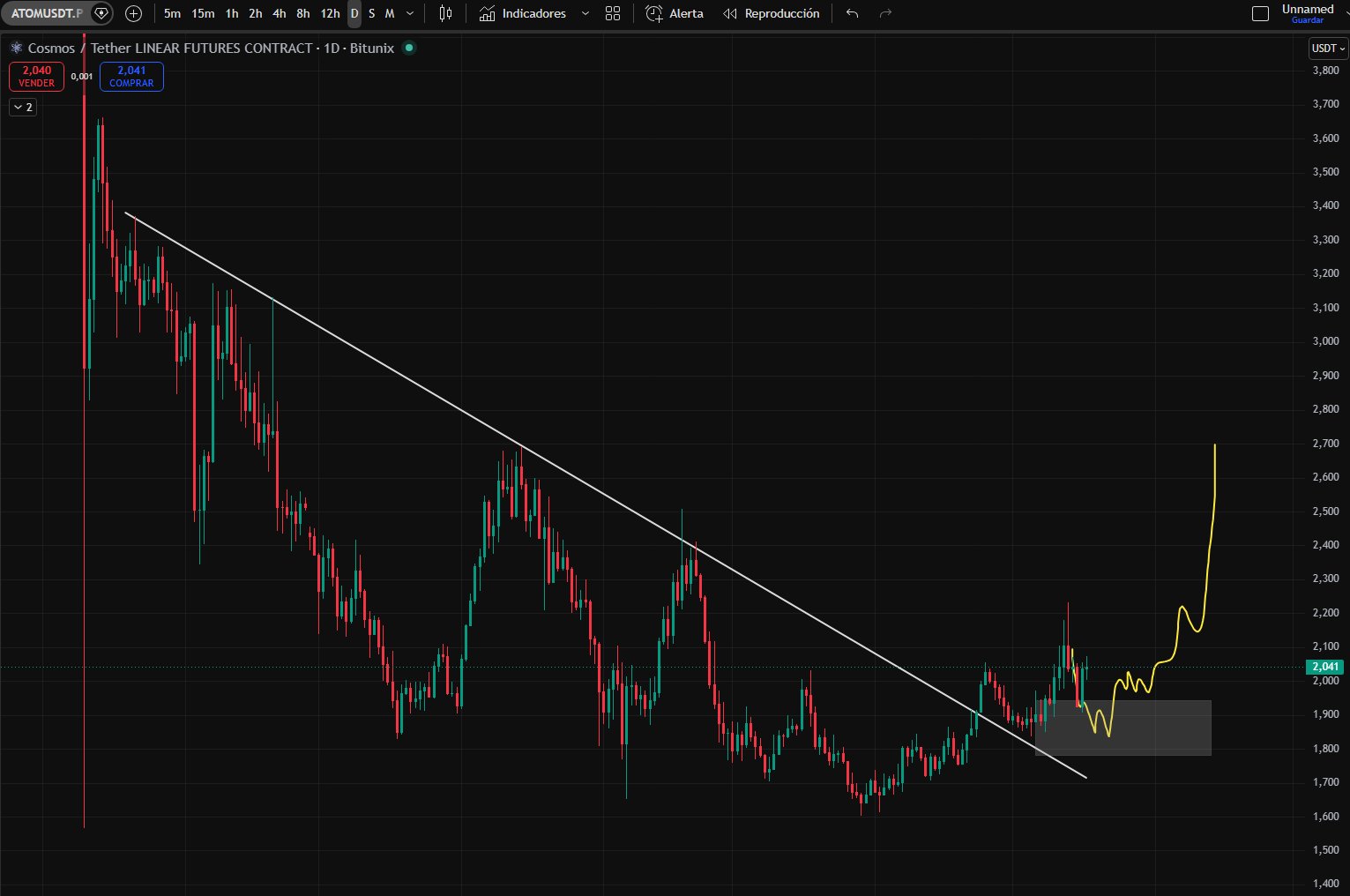
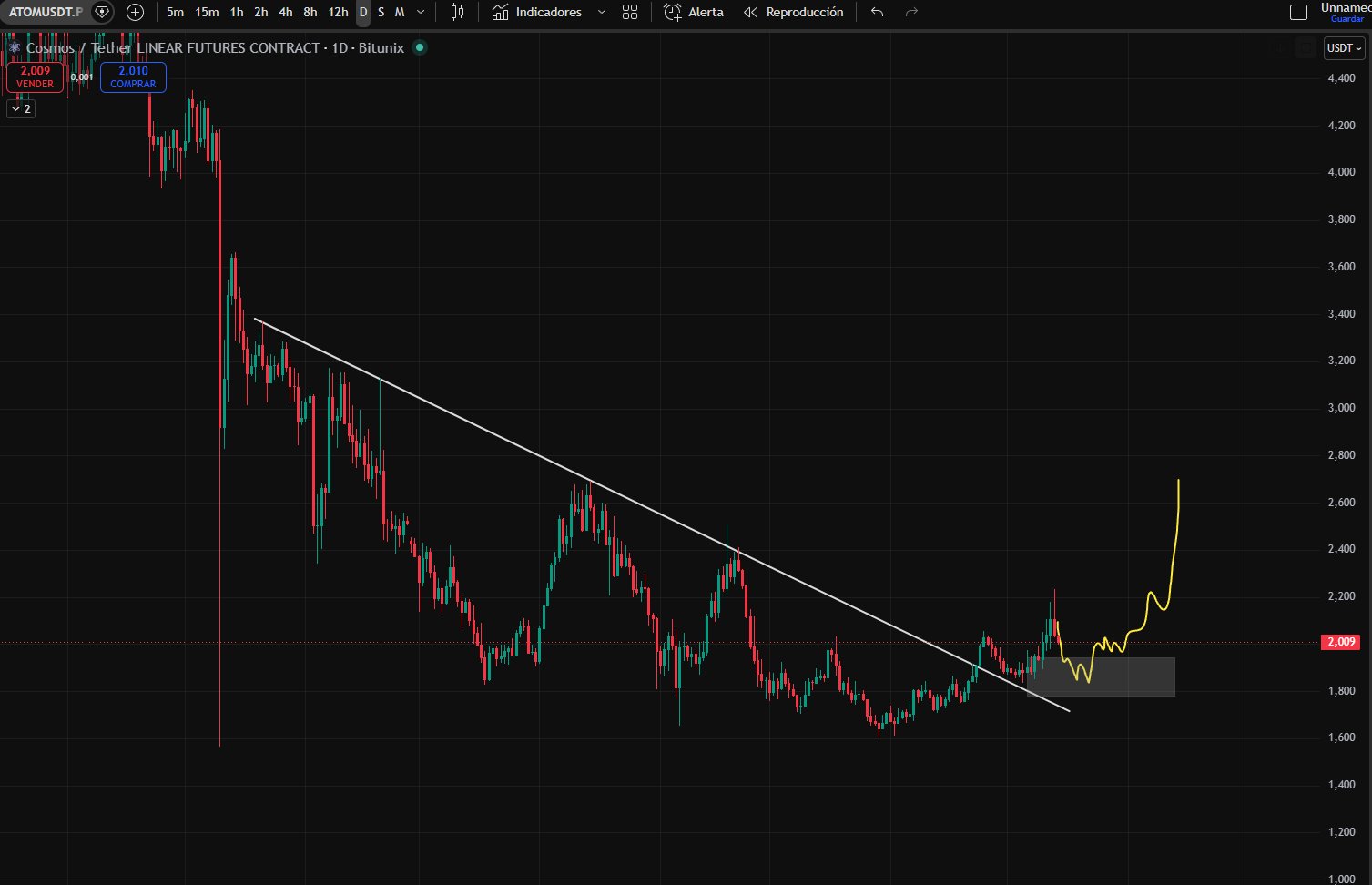 112 5 14.30K Leer original >Tendencia de ATOM tras el lanzamientoExtremadamente alcista
 CosmosBG Degen Fight Club⚛️☯️🏴☠️🧪⚡️ 🛰 TA_Analyst OnChain_Analyst B2.11K @IvanM10529875
 24 3 888 Leer original >Tendencia de ATOM tras el lanzamientoExtremadamente alcista
 Marvey DeFi_Expert OnChain_Analyst B3.20K @marvey_crypton
 Cosmos Hub ⚛️ D64.78K @cosmoshub176 5 8.65K Leer original >Tendencia de ATOM tras el lanzamientoNeutral
 Eric Van Tassel (Not a Financial Advisor!) TA_Analyst Trader S6.61K @XRPathologist
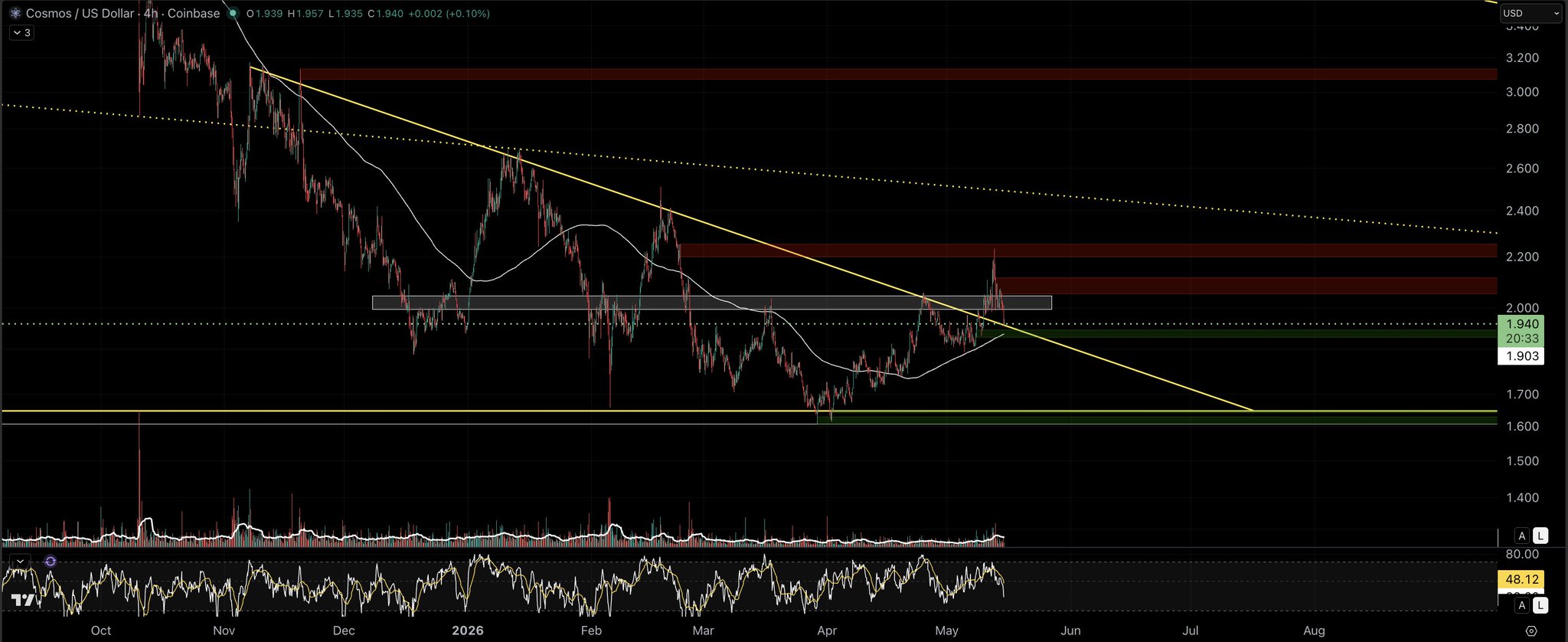 8 1 1.31K Leer original >Tendencia de ATOM tras el lanzamientoAlcista